 Canada
 United States
How-to
How to Clear Green Koi Pond Water Without Killing Your Fish
Green koi pond water is suspended algae that rarely harms fish. Here is the calm, fish-safe way to clear it by fixing the cause, not shocking the pond.
Last updated August 31, 2026
Green water is caused by suspended algae and rarely harms koi directly. Clear it safely by fixing the cause, not shocking the pond: run aeration to hold dissolved oxygen at 6-9 mg/L, add beneficial bacteria to consume excess nutrients, add shade or plants to cut light, and use a UV clarifier if you want faster results.
If you have just walked out to a pea-soup green pond with your koi swimming in it, take a breath before you reach for the algaecide. That green tint is almost always suspended algae, and suspended algae is far more of a cosmetic problem than a threat to your fish. The mistake that actually kills koi is panicking and shocking the pond. This guide walks through the calm, fish-safe way to clear green water by treating the cause instead of the symptom.
First, do not panic: green water rarely hurts koi
Green water is a bloom of tiny single-celled algae floating in the water column. Koi commonly live in it comfortably, and in nature a light algae bloom is part of a working pond. The real danger is not the color, it is an oxygen swing: algae produces oxygen during the day and consumes it at night, so a heavy bloom can pull dissolved oxygen down before dawn. That is the window when fish get into trouble.
This is exactly why over-treating is so risky. If you dump in a fast-acting algaecide, the whole bloom can die at once, and the decaying algae then consumes even more oxygen as it rots, crashing dissolved oxygen and suffocating the fish you were trying to protect. We cover that failure in detail in why algaecide kills koi. The takeaway: clear the water gradually, and keep oxygen high the entire time.
Green water rarely hurts koi. Panic over-treatment does. Fix the cause, keep the oxygen up, and let the pond clear on its schedule, not yours.
Why your koi pond turns green (nutrients + light + low oxygen)
Suspended algae is not a random visitor. It shows up when three ingredients line up: surplus nutrients, plenty of light, and often a low-oxygen bottom that keeps releasing more nutrients. Excess phosphorus and nitrogen are the fuel, sunlight is the energy, and stagnant water lets it all accumulate.
- Overfeeding and overstocking. Uneaten food and fish waste load the water with the phosphorus and nitrogen algae feed on.
- Full sun with no shade. Bright, unshaded ponds hand algae the light it needs to bloom.
- Low dissolved oxygen and stagnation. A still, oxygen-poor bottom lets nutrient-rich muck build up and feed the next bloom.
- A young or disturbed biofilter. New ponds, or ponds recently dosed with chemicals, lack the beneficial bacteria that would otherwise out-compete algae for those nutrients.
Notice that none of these causes are fixed by killing the algae. Kill the bloom and leave the nutrients behind, and a fresh bloom simply grows back on the same fuel. That is why the durable fix works on the inputs, which is the whole idea behind the 3-step Nature's Pond Care Program: Renew, Revive, Remove.
The safe fix stack, ranked by fish-safety
Here is the order we recommend, from safest and most foundational to optional accelerators. Do them in this sequence, not in reverse.
1. Aeration (do this first)
Aeration is the single most important safety layer, and it is step one for a reason. Bottom-up diffused aeration adds oxygen where the pond needs it most and keeps the water circulating so it does not stratify into a warm top and a dead, oxygen-starved bottom. Holding dissolved oxygen in the healthy 6-9 mg/L range protects your koi through the pre-dawn low and gives beneficial bacteria the oxygen they need to work. If you are unsure how much air your pond needs, our guide to how much aeration a koi pond needs covers the targets and sizing path.
2. Beneficial bacteria (consume the nutrients)
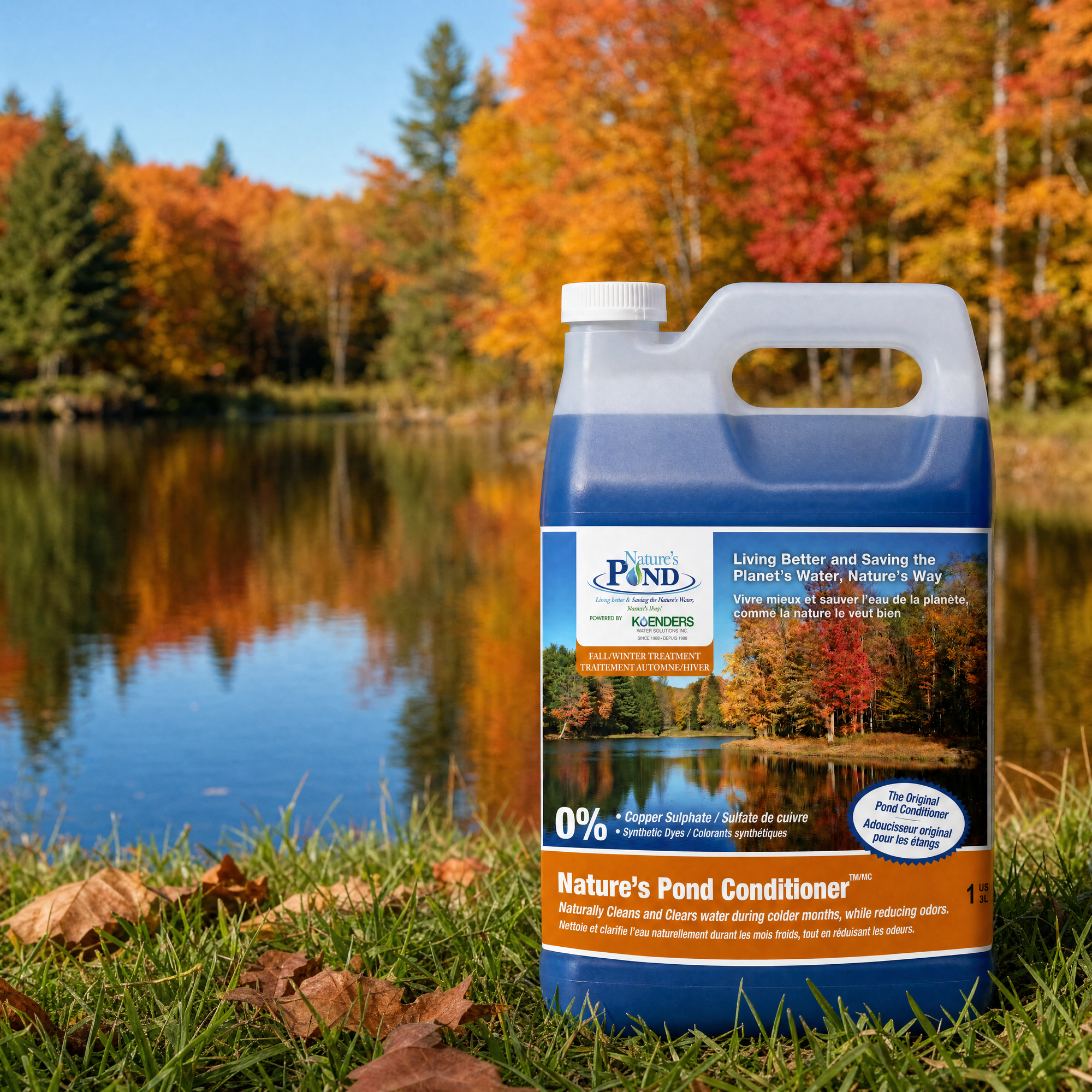
Once the water is oxygenated, add beneficial bacteria to go after the cause. Nature's Pond Conditioner is an all-natural blend of aerobic and anaerobic beneficial bacteria, enzymes, and plant extracts with a food-grade dye. It digests the excess organic matter and out-competes algae for the phosphorus and nitrogen the bloom feeds on, converting those organics to carbon dioxide and water. It is non-pathogenic and safe for fish, pets, livestock, and wildlife when used as directed. Bacteria works gradually and only with adequate oxygen, which is exactly why it comes after aeration, not before.
3. Shade and plants (starve the light)
Cutting the light supply starves algae of the energy it needs. Floating plants like water lilies, marginal plantings, and a natural pond dye all reduce how much sunlight reaches the water column. Shade will not clear an existing bloom overnight, but it makes every other step more durable by limiting how fast algae can regrow.
4. UV clarifier (fast, mechanical, fish-safe)
If you want visible results quickly, a UV clarifier is the fastest fish-safe option for suspended green-water algae. As water passes the ultraviolet lamp, the free-floating algae cells clump together so your filter can trap and remove them, all without any chemical entering the pond. A UV clarifier treats the symptom, though, so pair it with aeration and bacteria so the underlying nutrient problem does not simply bloom again.
5. Flocculant (last resort, use with aeration)
A flocculant clumps suspended particles so they settle out and can be netted or filtered. It can clear water fast, but it adds settled organic load to the bottom, so use it sparingly, keep aeration running, and treat only part of the pond at a time.
| Method | Speed | Fish-safety | Treats cause or symptom |
|---|---|---|---|
| Aeration | Gradual | Very high, do this first | Cause (oxygen + circulation) |
| Beneficial bacteria | Gradual | Very high | Cause (removes nutrients) |
| Shade / plants | Gradual | Very high | Cause (limits light) |
| UV clarifier | Fast | High, no chemicals | Symptom (clears the bloom) |
| Flocculant | Fast | Moderate, aerate while using | Symptom (settles particles) |
| Copper algaecide | Fast | Low, oxygen-crash risk | Symptom (and refuels next bloom) |
What NOT to do
Two well-meant reactions cause most green-water fish kills. Avoid both.
- Do not shock the pond with algaecide. Killing the whole bloom at once triggers the oxygen crash that suffocates koi as the dead algae decays. Copper also damages gills and accumulates in your sediment where it stays reactive.
- Do not do a big sudden water change. A large, rapid swap can shock koi with temperature and chemistry changes and can knock back the beneficial bacteria in your biofilter. Small, gradual changes with dechlorinated water are safer if you change water at all.
Green water vs cloudy or brown water (quick diagnosis)
Not all discoloured water is an algae bloom, and the fix differs. Green means suspended algae and calls for the nutrient-and-light plan above. Cloudy gray, tan, or brown water usually points to suspended sediment, a new-pond bacterial bloom, or stirred-up muck rather than algae, and it often clears as the biology settles. If you are not sure which you are dealing with, our companion guide on why your pond water is cloudy walks through the diagnosis so you treat the right problem.
The fish-safe order, start to finish
Everything above rolls up into one simple sequence. Aerate first so oxygen never drops. Build the biology with beneficial bacteria so the nutrients feeding algae get consumed. Reduce light with shade and plants. Only then reach for an accelerator like a UV clarifier if you want faster clarity. That aeration-first, biology-second order is the heart of fish-safe pond and koi care, and it is what keeps clear water and living fish from being a trade-off.
If you would rather not guess at doses or sizing, our in-house pond experts will build a plan for your exact pond at no charge. Tell us your pond size and what you are seeing on the contact page, or explore fish-safe care for koi and ornamental ponds to see the full approach.
Related
- Fish-safe pond and koi care The safety-first hub for clearing water without hurting fish
- Why algaecide kills koi The oxygen crash that kills fish after treatment
- How much aeration a koi pond needs Dissolved oxygen targets and sizing your air
- Pond conditioners Beneficial bacteria that consumes the nutrients feeding algae
- The 3-step Pond Care Program Renew, Revive, Remove: clear water naturally
- Talk to our pond experts Free plan and dosing for your exact pond
FAQ