 Canada
 United States
Sector guide
Koi Pond Care: Water Quality, Aeration and Natural Health Basics
A practical guide to koi pond care, covering stable water quality, aeration, filtration, feeding and realistic natural pond-care practices. Build a clearer, healthier ornamental pond by managing the system behind the water.
Last updated August 8, 2026
A clear koi pond is not only a visual feature. It is a living system in which fish, plants, microbes, oxygen, food and filtration influence one another every day. Good koi pond care means building stable conditions first, then making measured adjustments when something changes. That approach protects the appearance of an ornamental pond while supporting resilient fish and reducing the temptation to chase problems with quick fixes.
Start with water quality, not water appearance
Water can look bright and still be stressful for koi, while a brief period of cloudiness may be harmless during a seasonal change. Appearance matters, but it is only one signal. The more reliable foundation is routine observation and testing, especially after adding fish, changing feeding habits, cleaning filters, heavy rain or a spell of hot weather.
For koi, the priority is a stable nitrogen cycle. Fish waste and decomposing food produce ammonia. Beneficial microbes in a mature biofilter convert ammonia to nitrite, then convert nitrite to nitrate. Plants, water changes and natural biological processes help manage the remaining nutrients. When this cycle is disrupted, water quality can change quickly even if the pond has looked fine for months.
- Ammonia and nitrite, which should be addressed promptly if detected in an established pond.
- pH and alkalinity, because stability is often more important than pursuing a single ideal reading.
- Water temperature, which affects oxygen, fish metabolism and feeding needs.
- Dissolved oxygen, especially during warm weather, overnight and after heavy organic loading.
- Nitrate, clarity and visible algae as indicators of the pond's nutrient balance.
Keep a simple log of test results, weather, maintenance and fish behaviour. The trend is often more useful than any isolated reading. If a value shifts after a filter clean or rainstorm, the log helps identify the likely cause before a small issue becomes an emergency.
Build the pond around oxygen and circulation
Aeration is one of the most practical supports for koi pond care. Koi require oxygen, and so do the microbes that process waste in filters and on pond surfaces. Warm water holds less oxygen than cool water, while fish activity, decomposition and algae all affect demand. A pond can therefore become oxygen-limited at the exact time fish are most active and water quality is under pressure.
A dedicated aeration system moves air through diffusers, creating rising columns of bubbles and broad water movement. A waterfall or fountain can add surface agitation, but its value depends on the design and it may not distribute oxygen effectively through deeper areas. For many ornamental ponds, supplemental bottom aeration provides more dependable circulation, particularly where fish load, depth or summer temperatures are significant.
Where to place aeration
Place diffusers to encourage circulation without turning the pond into a constant current. In a simple pond, a diffuser near the deeper zone can help lift lower water and move it toward skimmers or intake points. In long, irregular or multi-basin ponds, more than one diffuser may be needed to avoid stagnant pockets. Keep the strongest turbulence away from quiet planting shelves and any area where fish normally rest.
Watch fish behaviour when changing aeration. Koi gathering at a waterfall, skimmer or air stone can signal low oxygen, but surface activity can also have other causes. If fish are gasping, listless, suddenly crowded near moving water or showing unusual distress, treat it as an urgent water-quality situation: increase aeration, stop feeding temporarily, test the water and seek qualified local advice if symptoms persist.
Use filtration as a system, not a single box
Effective filtration usually combines mechanical and biological work. Mechanical filtration captures leaves, uneaten food and suspended debris before it breaks down. Biological filtration provides colonized media where beneficial microbes process dissolved fish waste. Some systems also include skimmers, settlement areas, ultraviolet clarifiers or planted zones. Each component has a role, and no single component replaces the others.
Mechanical filtration protects biological capacity
Empty skimmer baskets and clean or rinse mechanical media before trapped debris decomposes. Do this gently and according to the equipment design. A filter that is allowed to clog can reduce flow, lower oxygen transfer and send more organic material into the biological stage. The goal is not to make every surface sterile. It is to remove concentrated waste while preserving the pond's useful microbial community.
Protect the biofilter
Biofilters need steady oxygen-rich flow, suitable surface area and time to mature. Avoid cleaning all filter media at once, replacing media unnecessarily or rinsing biological media aggressively with treated tap water. If the system needs a deep clean, work in stages so some established biology remains active. After a power interruption, heat wave, medication treatment or major cleaning, test more often because the biological balance may need time to recover.
- Flow from returns or waterfalls has noticeably declined.
- Fine debris accumulates faster than normal or water stays persistently cloudy.
- Ammonia or nitrite appears after feeding, storms or maintenance.
- The pond has a recurring organic odour, dark sediment or heavy sludge around dead zones.
- Fish load, feeding or plant cover has changed without a corresponding review of equipment capacity.
Feed koi for the season and the water conditions
Overfeeding is one of the most common avoidable pressures on an ornamental pond. Food that koi do not consume becomes nutrient load. Food that they do consume still becomes waste the filter and pond must process. Feed a quality diet in portions the fish readily finish, then adjust frequency and quantity for water temperature, fish activity and the pond's current water-quality results.
As water cools, koi metabolism slows. Their feeding programme should slow with it. During severe heat, oxygen demand and water-quality pressure can rise, so feeding should be conservative and based on fish behaviour rather than routine alone. Do not use feeding to test whether a stressed fish will recover. When water quality is uncertain, testing and stabilizing conditions come before adding more food.
Natural pond care supports balance over time
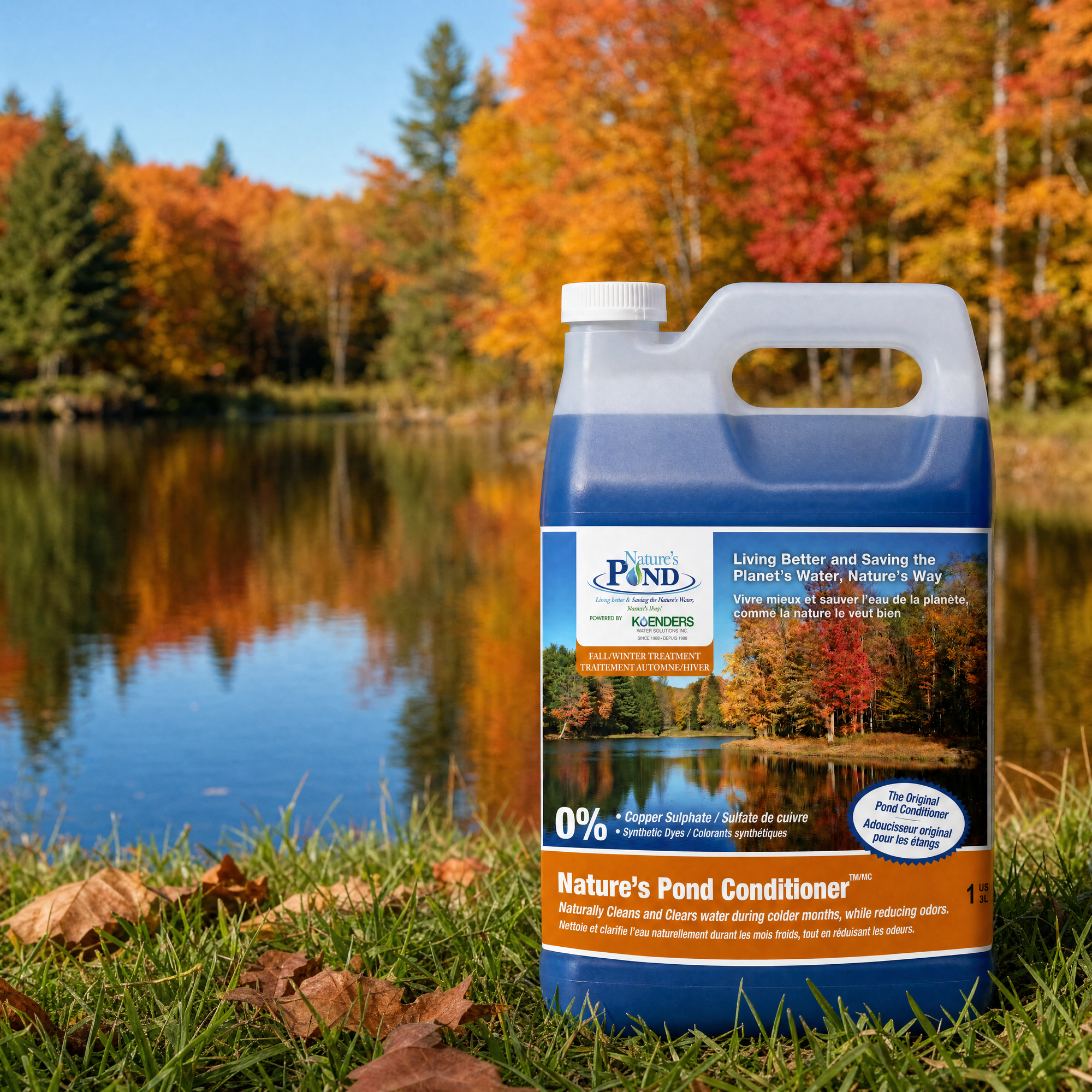
Natural and beneficial-bacteria pond products can be useful additions to a sound pond-care programme. Used as directed, they may help break down organic matter, support nutrient cycling, improve water clarity and gradually reduce muck or odour associated with accumulated waste. They are most effective when oxygen, circulation and filtration are already adequate.
These products are not a substitute for removing a dead animal, repairing a failed pump, stopping overfeeding or correcting unsafe ammonia or nitrite. Think of them as biological support, not an instant reset. Results depend on temperature, oxygen, organic load, existing filtration and the underlying source of nutrients. Consistent use alongside good maintenance is generally more realistic than expecting a single treatment to transform a pond overnight.
Manage algae by managing light and nutrients
Algae is a normal part of pond ecology. A light coating on surfaces can be expected, but pea-green water or heavy string algae usually means the pond has abundant light, nutrients or both. Start by reviewing feeding, debris capture, circulation, plant balance and filtration performance. Remove loose algae and accumulated debris manually where practical, since leaving it in the pond returns nutrients as it decomposes.
Aquatic plants can help shade water and use available nutrients, but they require planning around koi. Koi may uproot or browse many varieties, so use protected planting areas, baskets or dedicated shelves. Avoid making several major changes at once. Altering shade, filtration, feeding and treatments simultaneously makes it difficult to learn what actually improved the pond.
A practical koi pond care routine
A routine makes pond care calmer and more effective. Daily observation catches behaviour changes early. Weekly tasks maintain flow and remove fresh debris. Seasonal reviews prepare the system for changing temperatures and fish metabolism. Tailor the schedule to your pond rather than following a rigid calendar.
- Observe koi before feeding. Look for normal swimming, appetite, fins, skin condition and breathing behaviour.
- Check pumps, air flow, waterfalls and returns. Clear obvious blockages before flow is reduced for long.
- Remove leaves, uneaten food and loose organic debris from skimmers and accessible areas.
- Test water on a regular schedule and after any meaningful change in fish load, weather, maintenance or behaviour.
- Clean mechanical filtration as required, while preserving biological media and avoiding a complete system reset.
- Review feeding and adjust it to temperature, appetite and water quality.
- Record what changed, including treatments, new fish, equipment work and test results.
Keep koi healthy through prevention
The best natural approach to koi health is prevention through stable habitat and thoughtful husbandry. Quarantine new fish whenever possible, avoid sudden water chemistry changes and do not overcrowd the pond. New koi can introduce parasites or disease, while a sudden addition can also overwhelm a previously stable biofilter. Source fish from reputable suppliers and ask about their care and quarantine practices.
When a koi appears unwell, avoid assuming that a product alone is the answer. First confirm water quality and oxygen, review recent changes and inspect the fish without unnecessary handling. Repeated flashing, clamped fins, isolation, ulcers, rapid breathing or loss of balance warrant prompt assessment by an experienced aquatic professional or fish-health specialist. Accurate diagnosis matters because inappropriate treatment can place additional stress on fish and filter biology.
Healthy koi ponds are managed as ecosystems. Clear water is welcome, but stable oxygen, reliable filtration and attentive observation are the real measures of long-term success.
Choose improvements in the right order
If your ornamental pond is struggling, begin with the basics: test water, improve oxygen and circulation, remove excess organic debris, check filter flow and moderate feeding. Then consider longer-term upgrades such as more effective mechanical separation, expanded biofiltration, better aeration placement or protected planting. This order addresses the source of stress before adding complexity.
NATURE'S POND CARE products are designed to fit into that balanced approach. Pair natural biological support with practical pond maintenance, and use observations and water tests to guide decisions. The result is a pond-care plan that respects the needs of koi, protects the beauty of the landscape and gives the system the time it needs to respond naturally.
Related
- Koi and ornamental ponds Explore pond-care solutions designed for ornamental ponds and koi keepers.
- Pond aerator calculator Estimate an aeration approach based on your pond's dimensions and goals.
- Pond dosing calculator Plan product dosing carefully for your pond volume.
- Pond care program Build a consistent care routine around water conditions and seasonal needs.
- Learn about pond care Find more practical guidance for managing pond water naturally.
FAQ