 Canada
 United States
Natural care
Why Does My Pond Smell Like Rotten Eggs? Causes and Natural Fixes
A rotten-egg pond smell is usually hydrogen sulphide from an oxygen-starved muck layer on the bottom. Here is why it happens and how to fix the cause naturally.
Last updated August 3, 2026
If your pond smells like rotten eggs, that odor is almost always hydrogen sulphide gas rising from an oxygen-starved layer of muck on the pond bottom. When organic debris piles up faster than it can break down and the water near the bottom runs low on dissolved oxygen, decomposition turns anaerobic and produces that sulphur smell. The natural fix works on the cause, not the smell itself: restore oxygen to the bottom with aeration, then use beneficial bacteria to digest the muck that is generating the gas. That is a different approach from copper or herbicide treatments, which target plant and algae growth rather than the low-oxygen conditions at the root of the odor.
The short answer: rotten-egg smell is hydrogen sulphide
That distinctive rotten-egg or sewage smell is hydrogen sulphide (H2S), a gas produced when organic matter decomposes in the absence of oxygen. In a healthy, well-oxygenated pond, bottom debris breaks down aerobically and does not create strong sulphur odors. When the bottom goes low on dissolved oxygen, a different set of processes takes over and hydrogen sulphide is one of the byproducts.
So a rotten-egg smell is best read as a symptom, not the problem itself. It is telling you that the pond bottom has become anaerobic and that organic muck is accumulating there. Masking the odor does nothing; the durable fix is to change the conditions on the bottom so decomposition can go aerobic again.
How a low-oxygen pond bottom starts producing the gas
Ponds naturally collect organic material: leaves, grass clippings, dead algae and plants, runoff, and fish and wildlife waste. All of this settles to the bottom and forms a soft, dark muck layer. Breaking that muck down consumes oxygen.
When the supply of organic matter outpaces the pond's oxygen, the deepest water and the muck layer become oxygen-depleted. In that anaerobic zone, decomposition shifts to sulphur-based processes that release hydrogen sulphide. The thicker the muck and the stiller the water, the more pronounced the effect tends to be. This is why still, shallow, debris-heavy ponds are the most likely to develop an odor.
Why the smell gets worse in late summer
Many pond owners notice the rotten-egg smell peaks in mid to late summer. Two things are usually at work. First, warm water holds less dissolved oxygen than cold water, so the bottom is more prone to going anaerobic during a heat spell. Second, ponds without circulation can stratify, forming a warm oxygen-rich upper layer and a cold, oxygen-poor lower layer where hydrogen sulphide builds up.
When that stratification breaks down, an event often called turnover, the low-oxygen bottom water mixes up toward the surface and the trapped gas is released, which can make the smell noticeably stronger over a short period. Keeping the water column mixed through the season helps prevent that low-oxygen layer from forming in the first place.
Fix 1: Restore oxygen to the bottom with aeration
The first and most important step is to get oxygen back down to the pond bottom. Aeration circulates the water column and raises dissolved oxygen where the muck sits, which allows decomposition to proceed aerobically instead of producing hydrogen sulphide. Circulation also discourages the stratification that leads to summer turnover events.
Nature's Pond Care offers windmill, solar and electric aeration systems sized for different ponds, as well as decorative fountains that add surface movement. Bottom-diffused aeration is generally the most effective at reaching a deep muck layer, while fountains contribute circulation and visual appeal nearer the surface. Choosing a system matched to your pond's size and depth is the key to reaching the bottom where the gas is produced.
Fix 2: Digest the organic muck with beneficial bacteria
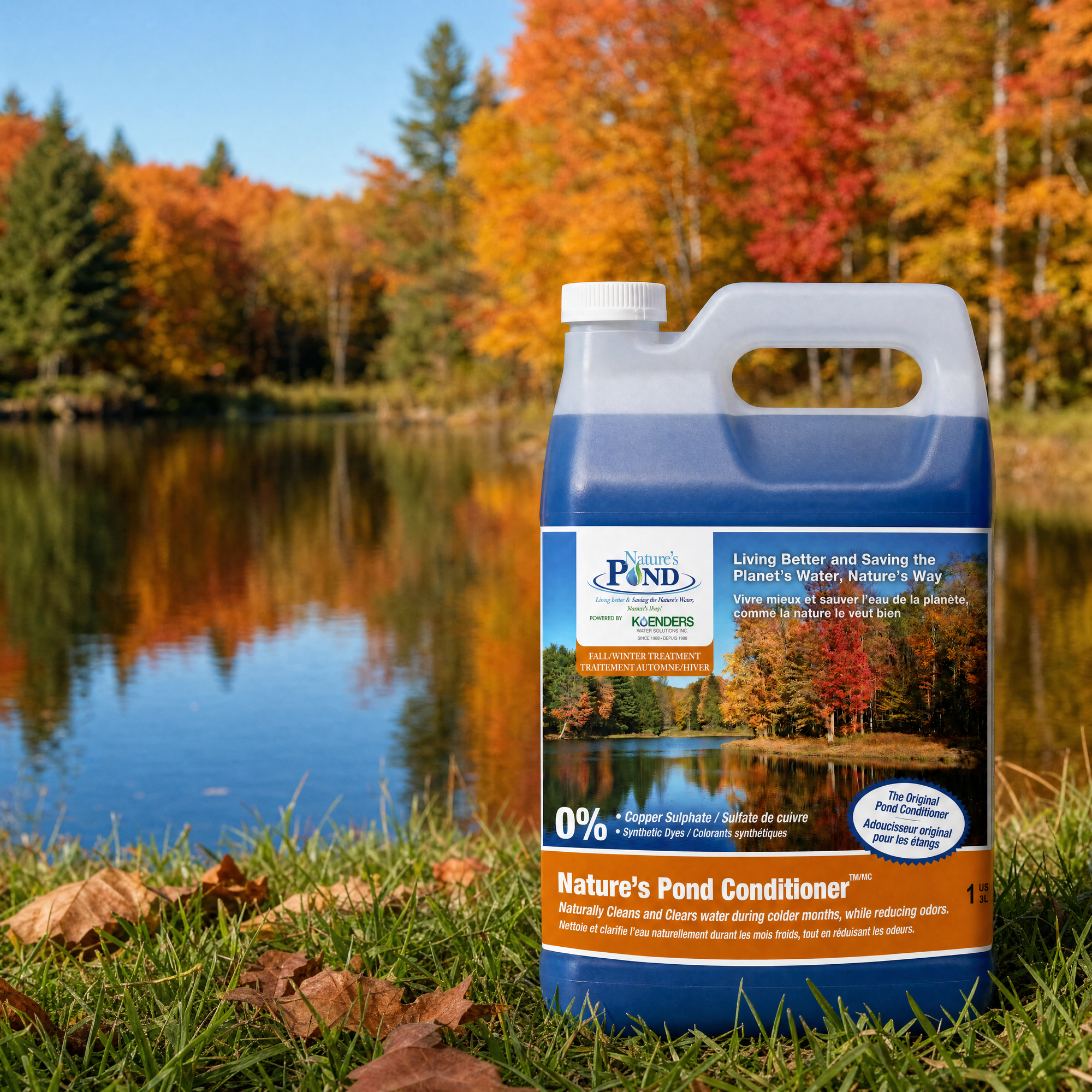
Aeration sets the stage; beneficial bacteria do the cleanup. Nature's Pond Care conditioners contain naturally occurring bacteria and enzymes that digest the accumulated organic muck and consume excess nutrients in the water. As the bacteria break down the debris layer that feeds anaerobic decomposition, they help shrink the source of the odor over time.
This works best in tandem with aeration, because these bacteria are most active in oxygen-rich water. Together, oxygen plus bacteria is a chemical-free approach, safe for fish, pets and wildlife when used as directed, that treats the cause: less muck and more oxygen mean fewer of the anaerobic conditions that generate hydrogen sulphide. Results build gradually through the season rather than overnight, and consistency matters more than any single large dose.
Why copper and herbicides do not address pond odor
Copper-based algaecides and chemical herbicides work by targeting plant and algae growth, not the low-oxygen conditions behind a rotten-egg smell. When a chemical treatment knocks down a large mass of algae or weeds, that dead organic material tends to sink and add to the muck on the bottom, which is exactly the material that feeds anaerobic decomposition.
That is the difference between treating a symptom and treating the cause. Adding more decaying organic load to an already oxygen-starved bottom can work against you where odor is concerned. A natural approach focused on dissolved oxygen and muck reduction targets the actual source instead.
How to reduce the conditions that cause odor season to season
Odor management is easier when you keep organic inputs down and oxygen up year-round. Run aeration consistently through the warm months, keep beneficial bacteria dosing on schedule, and limit the debris entering the pond where you can.
A few habits make a lasting difference over multiple seasons.
- Keep aeration running through spring, summer and fall to maintain dissolved oxygen and prevent stratification
- Dose beneficial bacteria on a regular schedule so muck is digested continuously rather than in one large batch
- Remove leaves, grass clippings and excess plant debris before they sink and add to the muck layer
- Physically thin out heavy weed growth with a tool like a Cutter 'N' Rake so it is removed rather than left to decompose
- Limit lawn fertilizer and runoff near the shoreline, since added nutrients feed more growth and more eventual muck
Related
FAQ