 Canada
 United States
Seasonal guide
Winter Pond Aeration and Seasonal Pond Care: A Guide to Preventing Fish Kill
Learn how to care for a pond through spring, summer, fall and winter, with practical guidance on winter pond aeration, gas exchange and preventing fish kill under Canadian ice.
Last updated August 8, 2026
A healthy pond changes with the seasons. Water temperature, oxygen demand, sunlight, runoff, plant growth and ice cover all affect what is happening below the surface. The best care plan responds to those changes instead of treating the pond the same way year-round. In cold climates, winter deserves particular attention because prolonged snow and ice cover can restrict gas exchange and reduce oxygen production. Winter pond aeration can help maintain an opening in the ice, release trapped gases and lower the risk of fish kill when it is selected, installed and operated correctly.
Why seasonal pond care matters
Ponds receive nutrients from many sources, including soil, leaves, grass clippings, livestock activity, wildlife waste, fertilizer runoff and decaying aquatic plants. Those nutrients support algae and plant growth. When organic material decomposes, bacteria and other organisms consume oxygen. Warm water naturally holds less dissolved oxygen than cold water, while ice and snow can limit contact with the atmosphere and reduce the light available for photosynthesis.
Seasonal management focuses on the underlying conditions. Aeration supports circulation and gas exchange. Shoreline care reduces incoming nutrients and sediment. Beneficial-bacteria products can help process organic material and excess nutrients, which may improve clarity and reduce muck and odour over time. Their performance depends on water temperature, oxygen, dosage, organic loading and pond conditions, so they should complement good management rather than replace it.
- Maintain adequate oxygen and gas exchange for fish and aerobic decomposition
- Limit avoidable nutrient and sediment inputs
- Remove manageable organic debris before it breaks down
- Watch for seasonal warning signs instead of waiting for a crisis
- Match aeration placement and operation to pond depth, shape and season
Spring pond care: inspect, restart and recover
Spring is a transition period. Melting snow, runoff and turnover can move sediment and nutrients through the water column. The pond may appear cloudy, develop odour or show early algae growth. Begin with observation. Check water level, inflows, banks, outlets and equipment before adding treatments. Note dead vegetation, eroded soil, unusual fish behaviour and debris that accumulated over winter.
Bring aeration back carefully
If aeration was shut down for winter, restart it gradually, especially in a deep pond with distinct water layers. Rapidly mixing low-oxygen bottom water throughout the pond can stress fish. Start with shorter operating periods and increase runtime as conditions stabilize. Inspect air lines, diffusers, intake filters, valves and power connections. Clean or replace components according to the equipment manufacturer's instructions.
- Remove accessible leaves, branches and dead plant material without disturbing the entire bottom
- Repair erosion and maintain a vegetated buffer where runoff enters
- Redirect nutrient-rich drainage where practical and permitted
- Begin beneficial-bacteria treatments only when water conditions suit the product label
- Record water clarity, odour, algae coverage and fish activity as a seasonal baseline
Summer pond care: protect oxygen and manage nutrients
Summer combines high biological activity with lower oxygen-holding capacity. Fish, algae, plants and decomposers all use oxygen, particularly overnight when photosynthesis stops. Hot, still weather, heavy algae growth and large amounts of decaying vegetation can increase stress. Fish gathering near an inflow, diffuser or surface, especially around dawn, can indicate an oxygen problem and warrants prompt investigation.
Use aeration as part of a complete plan
Properly sized bottom-diffused aeration can circulate water and support oxygen transfer, but equipment must suit the pond's depth, area, shape and organic load. A single diffuser may leave isolated coves or deep pockets poorly circulated. Confirm coverage with a qualified supplier or a pond aerator sizing tool. Keep compressor intakes clean and ensure cabinets have the ventilation specified by the manufacturer.
Reduce the workload on the system by controlling nutrient inputs. Avoid applying fertilizer close to the shoreline, keep grass clippings out of the water and stabilize exposed soil. Where livestock use the pond, consider controlled access or an alternative watering arrangement that protects banks and reduces direct manure input. Beneficial bacteria may assist with nutrient cycling and organic residue, but results are gradual and do not make uncontrolled runoff harmless.
Treat the source as well as the symptom. Algae removal may improve appearance today, but nutrient control, circulation and organic-matter management shape what happens next.
Fall pond care: prepare before freeze-up
Fall preparation can materially improve winter conditions. Leaves and dying aquatic plants become oxygen-demanding organic matter as they decompose. Remove what is practical before it sinks, while preserving appropriate habitat and avoiding extensive disturbance of bottom sediment. Clean shoreline debris, empty collection nets regularly and address erosion before frozen ground limits access.
Inspect the winter aeration system while weather and access are still favourable. Check the compressor or windmill, air line, fittings, diffuser and mounting arrangement. Confirm that the line slopes or is protected in a way that reduces condensation-related freezing, following the equipment supplier's guidance. Mark the diffuser location and decide where warning signs or barriers will be placed once ice forms.
Adjust diffuser placement for winter
A diffuser used for summer circulation is often located in deeper water. Winter operation has a different purpose. It should maintain gas exchange and an opening in the ice without unnecessarily mixing the entire deepest basin. Deep mixing can remove the relatively warmer refuge near the bottom and expose fish to colder, more uniform conditions. In many ponds, moving the diffuser to a shallower area for winter is appropriate, but the correct location depends on pond contours, fish species and equipment. Seek site-specific advice if the pond is deep, unusually shaped or supports valuable fish.
Winter pond aeration and preventing fish kill
Winter fish kill, sometimes called winterkill, occurs when fish cannot obtain enough dissolved oxygen during prolonged ice cover. Clear ice may allow some photosynthesis, but snow-covered ice blocks much of the available light. Plants and algae produce less oxygen while fish, microorganisms and decomposing organic matter continue to consume it. Gases from decomposition can also accumulate beneath sealed ice. Shallow, nutrient-rich ponds with heavy muck or vegetation are often more vulnerable than deep, low-nutrient ponds, although no pond is identical.
How keeping a hole open helps
An aeration system releases air through a diffuser, creating rising bubbles and water movement. This circulation can keep an area from sealing completely, allowing atmospheric contact and the release of trapped gases. The opening itself and the moving water around it are the important outcomes. Aeration does not add unlimited oxygen, and it cannot overcome every combination of severe organic loading, equipment failure and prolonged winter conditions. It is most effective as part of a prevention plan begun before oxygen reaches a critical level.
Electric compressors are common, but remote ponds may not have dependable grid power. Koenders windmill aeration can help maintain winter gas exchange where the site has suitable wind exposure. Because wind varies, system selection should account for pond conditions and local reliability needs. A backup or alternative power strategy may be appropriate for high-value fisheries or sites with inconsistent wind. Follow the manufacturer’s installation, maintenance and cold-weather guidance.
Winter aeration safety
Aeration makes ice unpredictable far beyond the visibly open water. Never assume nearby ice is safe because it looks thick. Place clear warning signs and physical barriers where people, pets, livestock, snowmobiles or skiers could approach. Inform family members, neighbours, staff and site users. At public or workplace sites, follow applicable municipal, provincial, insurance and occupational requirements. Do not walk onto the ice to inspect or reopen an aeration hole.
- Start planning in fall, before the pond is sealed by ice
- Use equipment sized for the pond and protected for cold-winter conditions
- Place the winter diffuser to preserve deeper fish refuge while supporting gas exchange
- Keep the system operating consistently according to the design and manufacturer guidance
- Inspect equipment from shore and respond promptly to changes in sound, airflow or the open-water area
- Reduce leaves, dying vegetation and nutrient inputs before winter
- Treat all ice near an operating aerator as unsafe
A practical winterizing sequence
- Assess the pond's fish population, depth, organic load, winter history and access to power or wind.
- Remove reasonable amounts of leaves and dead vegetation, and stop new debris from entering where possible.
- Inspect and service the compressor or windmill, air line, diffuser, valves and intake components.
- Move or install the winter diffuser in an appropriate shallower zone, using site-specific advice where needed.
- Test the complete system before ice forms and verify visible, steady airflow.
- Install warning signs and barriers, then tell everyone who may enter the property that the ice will be unsafe.
- Monitor operation from shore throughout winter and arrange a safe service response if airflow stops.
Monitoring and troubleshooting through the year
Simple records make pond care more reliable. Photograph the same shoreline locations each month and note weather, water colour, odour, algae, plant coverage, fish behaviour and equipment operation. If the pond supports a valuable fish population, consider using a calibrated dissolved-oxygen meter and taking readings at consistent locations and depths. Follow proper sampling procedures, because one surface reading may not represent conditions near the bottom or in an isolated bay.
Sudden fish distress, widespread mortality, a strong sewage-like odour or an unexpected equipment failure deserves prompt professional attention. Avoid making large, abrupt changes without understanding current oxygen and temperature conditions. For recurring problems, review the whole watershed, pond dimensions, fish load, sediment, plant community and aeration coverage rather than repeatedly treating surface symptoms.
Build a pond care plan that fits the site
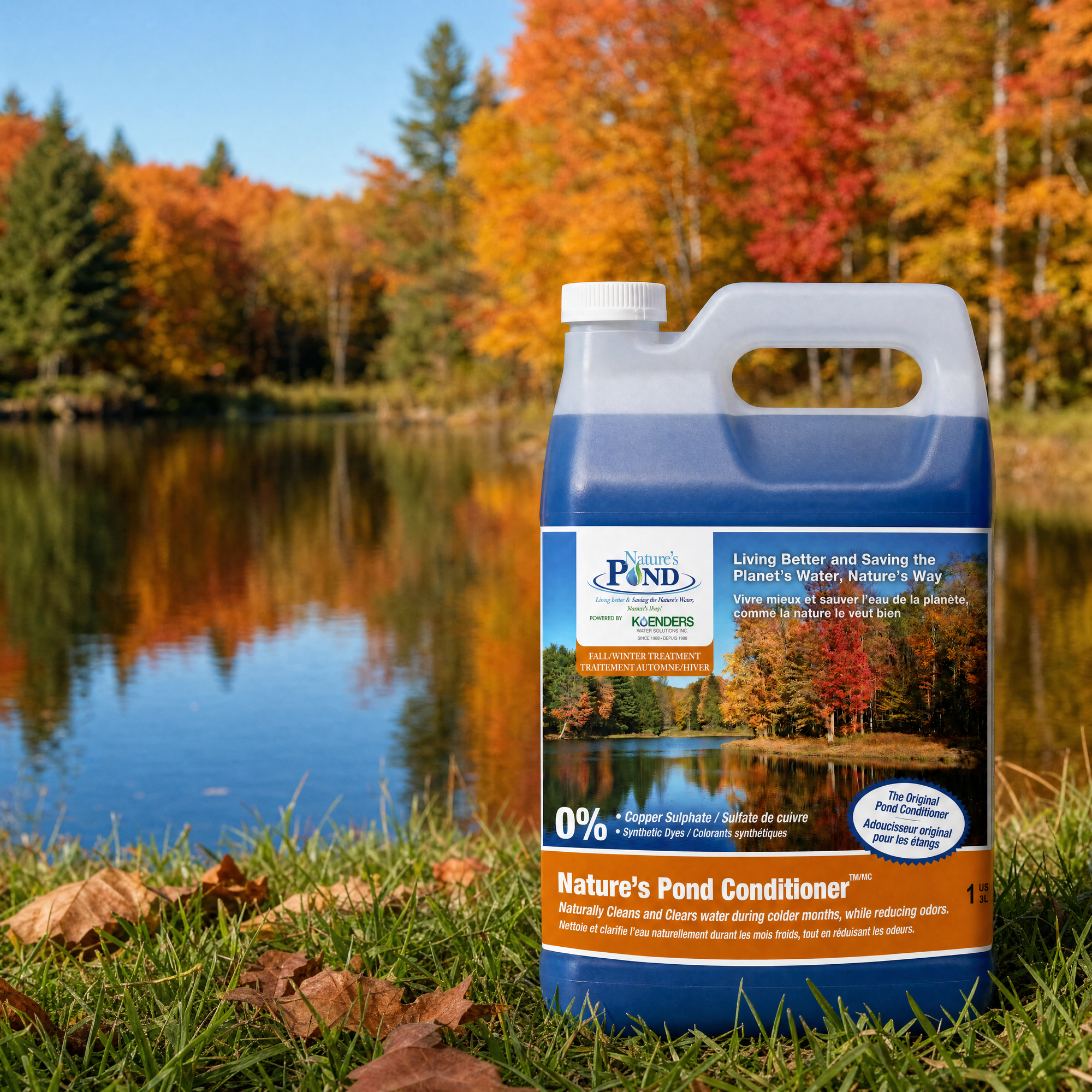
A farm dugout, acreage pond, koi pond and municipal stormwater pond do not have the same objectives or constraints. Fish species, pond depth, water use, local bylaws, electrical access and public safety all influence the plan. Start with accurate pond measurements, choose aeration for the actual conditions and manage the nutrients entering the water. NATURE'S POND CARE products and guidance can support this process, including beneficial-bacteria options intended to reduce available nutrients and help improve clarity, muck and odour over time.
The central principle is prevention. Spring inspection, summer oxygen management and fall cleanup all contribute to a safer winter. When ice arrives, correctly configured winter pond aeration provides a practical way to maintain gas exchange and reduce fish-kill risk, while careful placement and strict ice-safety measures protect the pond's deeper refuge and the people around it.
Related
- Pond Aerator Calculator Estimate aeration needs using your pond's dimensions and conditions.
- Pond Care Program Explore a coordinated approach to seasonal water quality, aeration and organic-matter management.
- Pond Care Learning Centre Find practical education on aeration, algae, beneficial bacteria and pond maintenance.
- Koi and Ornamental Ponds Review pond-care considerations for ornamental ponds and valued fish.
- Contact a Pond Specialist Get help assessing aeration placement, seasonal care and site-specific pond conditions.
FAQ