 Canada
 United States
Comparison
Bleach vs Beneficial Bacteria for Stock Tanks: What's Actually Safe for Cattle?
Bleach sanitizes a stock tank short-term but keeps coming back. Here is the honest, cattle-safe comparison with beneficial bacteria, plus dosing, taste, and lifetime cost.
Last updated August 31, 2026
Bleach sanitizes a stock tank and clears slime short-term, but it must be dosed carefully, given contact time, and cattle should not drink heavily chlorinated water until it dissipates. Beneficial bacteria instead digests the organics that feed algae, carries no drinking-water withdrawal, and is fish- and livestock-safe when used as directed, making it the better ongoing choice.
If you keep cattle or horses, you have probably reached for a jug of bleach when a stock tank turned green and slimy. It is cheap, it is on the shelf, and it clears the water fast. But the two questions that matter are the ones the bleach jug never answers: is the water still safe for your animals to drink, and will the slime just come back next week?
This is the honest, side-by-side comparison of the two most common ways to keep a stock tank clear: chlorine bleach and fish- and livestock-safe beneficial bacteria. We will cover what each one actually does, safe bleach dosing and the wait before animals drink, why the two do not mix, and the lifetime-cost math that most extension pages skip.
What bleach actually does in a tank (and what it doesn't)
Bleach is a disinfectant. When you add unscented household bleach to a stock tank, the free chlorine kills bacteria, algae, and other microbes on contact. That is genuinely useful for an occasional deep clean: it knocks back a heavy green bloom and sanitizes the tank surfaces so you can scrub and refill.
What bleach does not do is remove the reason the water went green in the first place. Algae grows on excess nutrients, sun, and still water. Bleach oxidizes the algae that is present, then dissipates within hours and leaves behind the same nutrient-rich conditions. The dead algae it kills also settles and decays, adding organic load. So chlorine is a reset button, not a cure. You will be pressing that button again and again all summer.
Bleach is a reset button, not a cure. It clears what is there, then leaves the same conditions that grew it.
Safe bleach dosing and contact time
If you do use bleach, use it correctly. Extension guidance commonly cites roughly 2 to 3 ounces of unscented household bleach per 50 gallons of water to sanitize a livestock tank, followed by contact time before animals drink freely. Rates, product strength, and local recommendations vary, so confirm the current figure with your provincial or state extension office before you dose. Never use scented, splash-less, or additive bleaches around livestock water.
The step most people skip is the wait. After treatment, the free chlorine needs time to dissipate. Cattle can drink water with low residual chlorine once it has cleared, but they often avoid heavily chlorinated water because of the taste, and reduced water intake is the last thing you want in summer heat. A practical rule: if you can still smell strong chlorine, wait longer or top the tank up with fresh water before you rely on it.
- Use only plain, unscented household bleach, never scented or additive types.
- Dose for cleaning, not as a constant additive you keep topping up.
- Give it contact time, then let the chlorine dissipate before animals drink freely.
- If you can still smell chlorine strongly, it is not ready: wait or dilute.
- Bleach corrodes and fades some tank materials and hardware over time.
None of this is a reason to panic if you have used bleach: applied properly and given time to clear, it is a legitimate sanitizing tool. It is simply a poor fit as your week-in, week-out clarity strategy, which is where beneficial bacteria comes in.
What beneficial bacteria does (and why there's no withdrawal)
Where bleach attacks the symptom, beneficial bacteria goes after the cause. Nature's Pond Conditioner is an all-natural blend of aerobic and anaerobic beneficial bacteria, enzymes, and plant extracts with a food-grade dye. Instead of sterilizing the water, it seeds the tank with microbes that digest the organic waste, leaf litter, manure, spilled feed, and dead algae, that nutrients build up from. As the bacteria consume that organic load, they convert it to carbon dioxide and water, starving the next algae bloom of its food supply.
Because it works biologically rather than as a disinfectant, there is no drinking-water withdrawal to manage. The blend is non-pathogenic and is safe for fish, pets, livestock, and wildlife when used as directed, so animals keep drinking normally while the tank clears. There is no chlorine taste to suppress intake, and no waiting period before the herd can use the water. If you want the mechanism in more depth, see how beneficial bacteria works.
The honest limits matter too. Bacteria is a maintenance tool, not an instant clear-up. It works with warmth and oxygen, so it performs best in the warm season and in water that is not stagnant, and it does not sanitize the way chlorine does. For a green tank you have neglected, the fastest path is to scrub it first, then dose bacteria to keep it clear, which we cover in the 7 ranked algae methods.
Head-to-head: bleach vs beneficial bacteria
Here is the practical comparison for a stock tank or trough. The bleach rate is the only figure below with a specific number, and it is attributed to extension guidance, not to us. Everything else is qualitative on purpose, because honest lifetime cost depends on your herd, tank, and climate.
| Factor | Bleach | Beneficial bacteria |
|---|---|---|
| What it does | Sanitizes and oxidizes algae on contact | Digests the organics that feed algae |
| Drinking-water withdrawal | Yes, wait for chlorine to dissipate | None when used as directed |
| Taste and palatability | Strong chlorine taste can cut water intake | No off taste, supports normal intake |
| Effect on ongoing algae | Clears now, regrows as nutrients remain | Reduces the nutrient supply over time |
| Corrosion and material wear | Can corrode hardware and fade materials | No corrosive effect on tanks or pipes |
| Recurring labor | Re-dose and scrub repeatedly all season | Scheduled dosing plus lighter cleaning |
| Best use | Occasional deep-clean and sanitize | Ongoing clarity and odor control |
The lifetime-cost math nobody shows you
On the shelf, bleach looks unbeatable: a jug costs a few dollars. But per-dose price is the wrong number. The real cost of keeping a tank clear is the recurring one, and bleach is a recurring habit. Through the warm months you re-treat every time the green comes back, you still scrub hard because the underlying nutrient load never left, and you manage a drink-safe waiting period each time. That is labor and time repeated across every tank, every week, all season.
Beneficial bacteria changes the shape of that cost curve. You dose on a schedule, the water stays clearer between cleanings, and because the organic load is being digested rather than just killed, the tank does not rebound as hard. The honest claim is not that bacteria is free or instant: it is that it reduces the recurring labor and keeps water palatable, which is what actually costs you across a grazing season. We keep this qualitative because your real figure depends on tank count, water temperature, and how dirty the water gets.
This is the same root-cause logic behind the whole Nature's Pond approach: treat the system, not the symptom. It is laid out in the Renew, Revive, Remove program and applies to every vessel on the operation, which is why we bundle tanks, troughs, and dugouts together in the clean livestock water guide.
Does bleach kill the beneficial bacteria you're building?
Yes, and this is the single most important thing to get right if you use both. Chlorine is a disinfectant: it does not distinguish between the microbes causing your slime and the beneficial bacteria you are trying to establish. Bleach a tank you have been dosing, and you wipe out the colony you paid to build.
So do not run them at the same time. If a tank needs a hard reset, bleach it, let the chlorine fully dissipate, then re-dose beneficial bacteria into clean water to rebuild. Think of bleach as the occasional deep-clean and bacteria as the ongoing program. Alternate them deliberately, never overlap them.
- Empty and scrub the tank to remove slime and settled solids.
- If sanitizing, apply unscented bleach at the extension-cited rate and give it contact time.
- Let the free chlorine fully dissipate until there is no strong chlorine smell.
- Refill with fresh water and dose beneficial bacteria to establish the colony.
- Maintain with scheduled bacteria doses, shade, and light water movement, not repeat bleaching.
The verdict, by situation
Neither product is villain or hero. They do different jobs, and the right choice depends on what you are solving right now.
- Emergency sanitize or brand-new tank: unscented bleach at the extension-cited rate, with proper contact time and a drink-safe wait, is a reasonable deep clean.
- Ongoing clarity all season: fish- and livestock-safe beneficial bacteria on a schedule, so you stop chasing the same green water every week.
- Best of both: deep clean first if the tank is badly fouled, then switch to bacteria to keep it clear, never running the two together.
If your goal is a tank the herd drinks from freely, with less scrubbing and no chlorine-taste intake dips, the ongoing answer is biological. Keep stock tanks and troughs clear safely with a program built around it, and if you want a dose tailored to your tank sizes and climate, our pond care experts will size it for you free of charge.
Frequently asked questions
Related
- Clean livestock water guide Tanks, troughs and dugouts in one place
- 7 ranked stock-tank algae methods Every method, safest first
- What beneficial bacteria does How the biology actually works
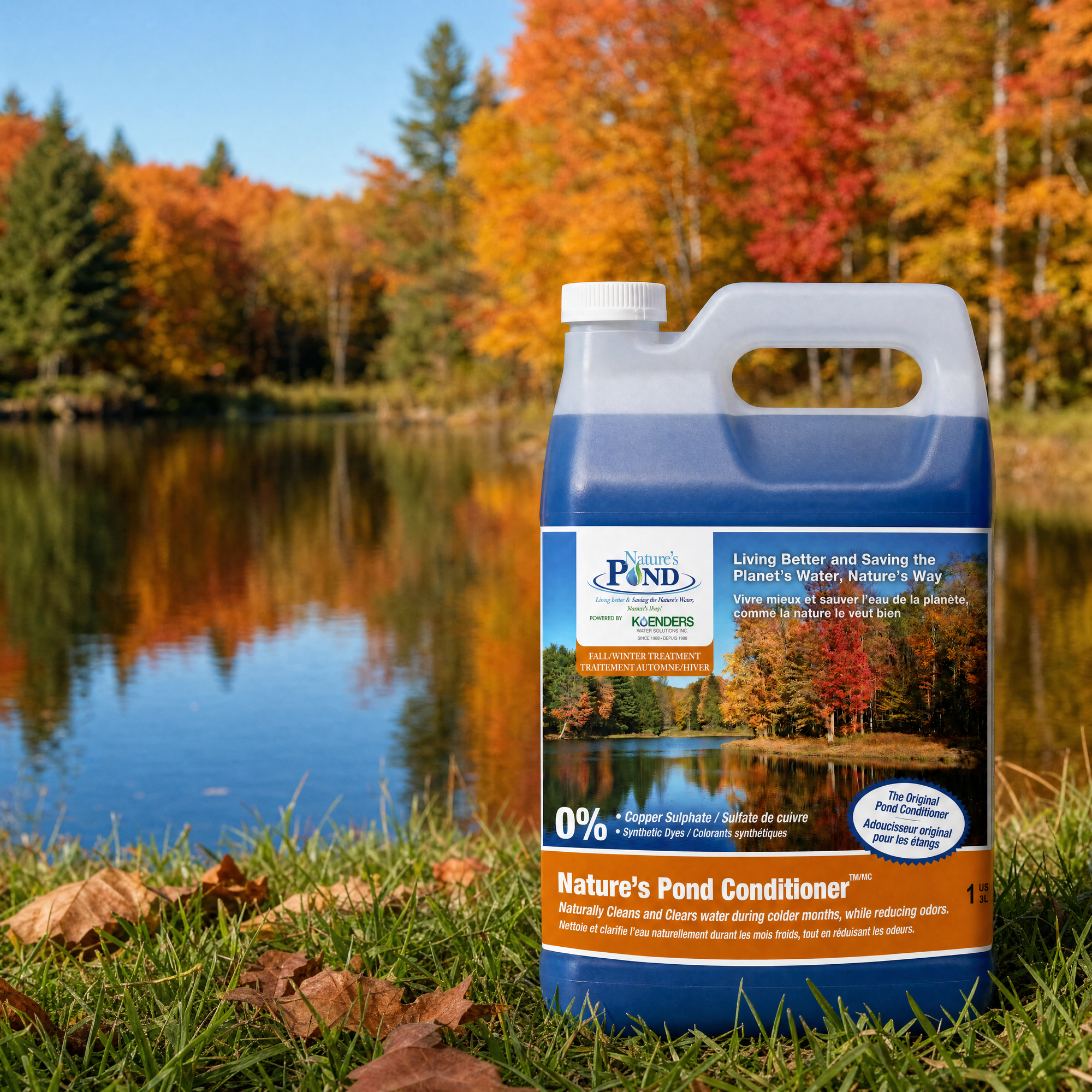
- Nature's Pond Conditioner Fish- and livestock-safe beneficial bacteria
- Stock tank and trough care Keep livestock water clear safely
- The Renew, Revive, Remove program The 3-step natural approach
FAQ