 Canada
 United States
How-to
How to Get Rid of Algae in a Stock Tank or Water Trough (7 Methods, Ranked by Safety)
Green slime in your trough? Here are 7 ways to clear stock-tank algae, ranked safest first, plus a set-and-forget routine that keeps cattle water clean.
Last updated August 31, 2026
To get rid of algae in a stock tank, empty and scrub it, shade it from direct sun, then add fish-safe beneficial bacteria to digest the nutrients algae feed on. Keeping the water moving helps. Bleach and copper sulfate work but carry withdrawal times, corrosion, and species risks, and copper sulfate is dangerous to sheep.
A stock tank or water trough turns green for the same three reasons every summer: sunlight, nutrients, and still water. Fix those and the slime has nothing to live on. Reach for the wrong quick fix and you can taint the water your animals drink, corrode the tank, or kill algae that simply sinks, rots, and feeds the next bloom.
Below are seven ways to clear a green trough, ranked safest first, so you can pick the method that keeps your cattle, horses, or sheep drinking freely. The short version: clean, shade, and let fish-safe beneficial bacteria do the ongoing work.
Why your trough turns green
Algae is not the problem. It is the symptom of an imbalance. Three things line up to grow it, and every effective method removes at least one of them:
- Sunlight. Direct sun on an open tank is a greenhouse for algae. Shade slows it dramatically.
- Nutrients. Spilled feed, manure, dust, leaves, and even minerals in the fill water are food. The more organic waste that settles in, the faster the green returns.
- Still, warm water. A stagnant tank in July heat is ideal. Moving, cooler water is far less hospitable.
This is the same root-cause frame we teach for any waterbody: excess nutrients plus low oxygen plus still water drive algae, muck, and odor. That is why the most durable answer is not a poison, it is removing the food and keeping the water aerobic. If you want the deeper mechanism, here is what beneficial bacteria does once it is in the water.
The 7 methods, ranked safest first
1. Empty, scrub, and shade
The foundation of every clean tank. Dump the green water, scrub the walls and bottom with a stiff brush to break the algae film loose, rinse, and refill. Then knock out the biggest driver: sun. A tank cover, a shade panel, or simply moving a portable tank into shade slows regrowth more than any additive. It costs nothing but labor and carries zero risk to your animals.
2. Beneficial bacteria (fish- and livestock-safe)
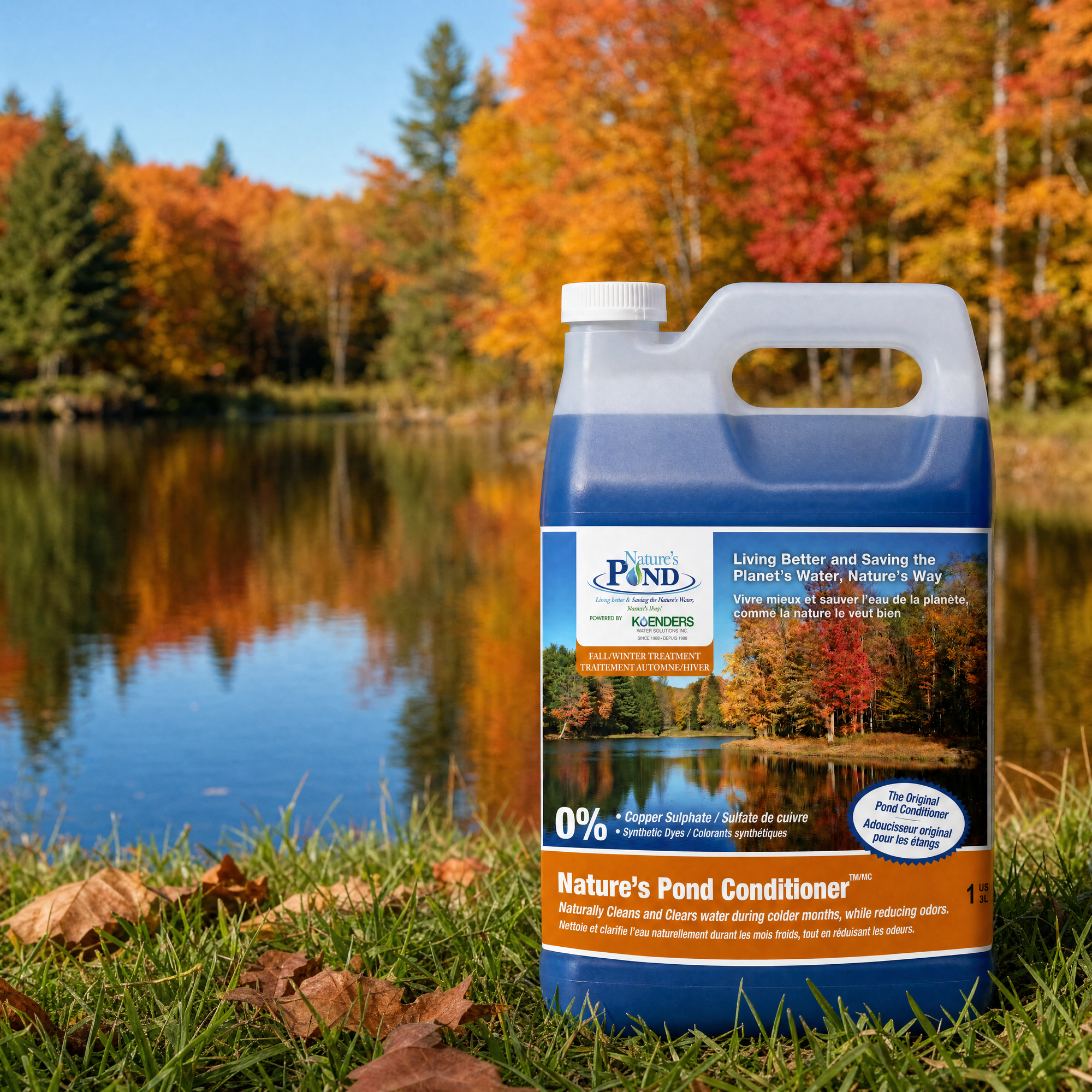
This is the method that keeps a tank clear between scrubbings. Nature's Pond Conditioner is fish-safe beneficial bacteria: an all-natural blend of beneficial bacteria, enzymes, and plant extracts that digests the organic waste algae feed on, converting it to carbon dioxide and water. It is non-pathogenic and safe for fish, pets, livestock, and wildlife when used as directed, so there is no drinking-water withdrawal to plan around. Dose on a schedule and it does the ongoing work that scrubbing alone cannot.
3. Aeration or keeping it moving
Still water is friendly to algae; moving water is not. Anything that keeps the surface turning over, a float valve with continuous fresh flow, a small recirculating pump, or a bottom aerator in a larger tank, raises dissolved oxygen and discourages the stagnant conditions blooms love. On a big trough or a dugout it also keeps the bottom aerobic, which is where beneficial bacteria works fastest.
4. Barley straw
As barley straw slowly decomposes it can suppress new algae growth. The honest caveats: it acts slowly, it works best as prevention rather than a rescue for an already-green tank, and too much of it adds organic load, which is the very thing you are trying to reduce. Treat it as a mild aid, not a fast clear-up.
5. Goldfish
Goldfish graze on some algae and eat mosquito larvae, and in a larger tank they can help. They are not a full fix: they add their own waste, they need the tank to stay unfrozen and un-chlorinated, and they cannot keep up with a heavy bloom. Think of them as a minor helper, not the solution.
6. Bleach
Unscented household bleach sanitizes a tank and clears slime fast. The catch is that it has to be dosed carefully and given contact time, and animals should not drink heavily chlorinated water until the free chlorine dissipates, which cattle often avoid on taste anyway. Extension guidance commonly cites a small measured amount of unscented bleach per volume for cleaning, followed by time before livestock drink freely. Confirm the current rate with your local extension, and note that bleaching also knocks back any beneficial bacteria colony you are building. We compare the two head-to-head in bleach vs beneficial bacteria.
7. Copper sulfate (and the sheep warning)
Copper sulfate kills algae, but it is the riskiest option on this list and the least durable. It corrodes galvanized and other metal tanks and plumbing, it kills algae that then sinks, rots, and refuels the next bloom, and it can be toxic. Sheep are especially sensitive to copper and store it in the liver, so a rate that is tolerable for cattle can build to fatal levels in sheep. Never use it in water shared with sheep. Any dosage figures you find should be confirmed with your local extension, never guessed. See the full breakdown in our copper sulfate stock tank dosage guide.
The methods at the top of this list remove the cause. The ones at the bottom attack the symptom and often make you repeat the job.
The one-page ranking table
| Method | Speed | Animal-safety note | Recurring effort | Corrosion risk | Best for |
|---|---|---|---|---|---|
| Scrub + shade | Immediate reset | None | Regular scrubbing | None | Every tank, as the baseline |
| Beneficial bacteria | Ongoing, builds over days | Fish- and livestock-safe as directed | Low: scheduled dosing | None | Keeping water clear between cleanings |
| Aeration / keep it moving | Ongoing prevention | None | Low once set up | None | Larger tanks, troughs, dugouts |
| Barley straw | Slow (prevention) | None at sensible amounts | Replace periodically | None | Mild prevention in mild cases |
| Goldfish | Slow, partial | Fine unless water freezes or is chlorinated | Feeding, overwintering | None | Large tanks as a minor helper |
| Bleach | Fast | Withdrawal until chlorine dissipates; reduces intake on taste | Re-dose often; kills good bacteria | Can affect fittings | Occasional deep-clean sanitize |
| Copper sulfate | Fast | Toxic to sheep; margin for error is small | Re-dose as blooms return | Corrodes metal tanks and pipes | Rarely the right call for drinking water |
How often should you clean a stock tank?
Clean often enough that slime never gets a foothold. In warm weather with full sun, that usually means every one to two weeks, and more often in a heat wave. The good news is that shade plus a scheduled dose of beneficial bacteria stretches the interval between scrubbings, because the water stays clearer on its own. If you are constantly scrubbing, you are treating symptoms: add shade and biology and the workload drops.
The set-and-forget routine
The lowest-effort clean tank combines three things that each remove a driver of algae:
- Shade the tank. A cover or a shaded location cuts the sunlight algae need.
- Keep it moving. Continuous fresh flow, a small pump, or aeration keeps the water oxygenated and less inviting.
- Dose beneficial bacteria on a schedule. Fish- and livestock-safe Nature's Pond Conditioner digests the organics before they can fuel a bloom, so you scrub less and the water stays palatable.
This is the same logic behind the 3-step natural program, Renew, Revive, Remove, scaled down to a trough: condition the water, keep oxygen up, and remove the organic load rather than poisoning the algae after the fact. For horses, cattle, and mixed herds across tanks, troughs, and dugouts, the full playbook is in our clean livestock water guide. If a dugout has gone black and smells of rotten eggs, that is a low-oxygen problem: here is why water smells like rotten eggs and how to reverse it.
Not sure which product or dose fits your tank size and herd? Talk to our pond experts for a free recommendation and we will point you to the right routine, no guessing at concentrated chemicals.
Related
- Clean livestock water guide Tanks, troughs, and dugouts in one playbook
- Bleach vs beneficial bacteria What's actually safe for cattle water
- Copper sulfate dosage and the sheep warning Dosage, corrosion, and safer alternatives
- Nature's Pond Conditioner Fish- and livestock-safe beneficial bacteria
- Stock tank and trough care Natural care built for livestock water
- The 3-step Pond Care Program Renew, Revive, Remove
FAQ