 Canada
 United States
Comparison
Copper Sulfate for Pond Algae: The Hidden Costs, Fish Risk and Better Natural Alternatives
Copper sulfate kills algae fast, then the dead algae rots and feeds the next bloom. Here are the hidden costs, the fish risk, and a durable natural alternative.
Last updated August 31, 2026
Copper sulfate kills pond algae quickly, but the dead algae then sinks, rots, and releases the same nutrients that fuel the next bloom, so treatments must be repeated. Copper also accumulates in bottom sediment and can stress fish. A natural alternative, aeration plus beneficial bacteria, removes the nutrients algae feed on and is durable with a lower lifetime cost.
The quick answer
If you have reached for copper sulfate to knock down a green pond, you are not alone. It works fast, and that speed is exactly why it feels like the right call. The problem is what happens next. Copper sulfate kills the algae, the dead algae sinks to the bottom, it rots, and that decay releases the very phosphorus and nitrogen that fed the bloom in the first place. Those nutrients feed the next bloom, so you treat again. And again.
Meanwhile copper does not break down the way organic matter does. It settles into the bottom sediment and can build up season after season, and it is toxic to far more than algae. There is a calmer, more durable path: raise dissolved oxygen with aeration, let beneficial bacteria consume the nutrients algae feed on, and remove heavy mats mechanically. It is slower to start, but it fixes the cause instead of the symptom, and over several seasons it usually costs less. That is the heart of the natural pond algae program.
How copper sulfate works (and why it feels like it works)
Copper sulfate is an algaecide. Dissolved in the water it releases copper ions that are toxic to algae cells, disrupting photosynthesis and killing the bloom, often within a day or two. That visible, fast result is genuinely satisfying: the pea-soup green clears, the surface scum drops, and the water looks better almost immediately.
The catch is that copper sulfate treats the symptom, not the cause. Your pond turned green because it had a surplus of nutrients, warm sunlit water, and too little oxygen and circulation. Copper does nothing about any of that. It simply kills the current crop of algae. The conditions that grew the bloom are still there the moment the copper wears off, which is why the relief is temporary and the treatments never seem to end.
Copper sulfate kills the algae you can see. It does nothing about the reason the algae grew in the first place.
The hidden costs of copper sulfate
The sticker price of a bag of copper sulfate is only the beginning. The real costs show up over the seasons that follow, and most of them are invisible on the day you treat.
The kill, sink, rot, refuel loop
This is the single most important thing to understand about any algaecide. When copper sulfate kills a bloom, that dead algae does not disappear. It sinks to the bottom and decomposes. As it rots, two things happen: the decay consumes oxygen, and it releases the stored phosphorus and nitrogen back into the water. Those released nutrients are fuel. Within weeks the pond has everything it needs to grow the next bloom, often faster and thicker than the last. You are not clearing the pond, you are feeding it. Learn more about how to get rid of pond muck at the source instead of adding to it.
Copper builds up in the bottom sediment
Copper is a metal. It does not biodegrade. Each time you treat, some of that copper settles into the muck on the pond bottom and stays there. Over repeated seasons it accumulates, which is one reason university extension specialists caution against leaning on copper sulfate as a long-term program. Once copper is in the sediment, you cannot simply remove it, and it can affect the bottom-dwelling life that keeps a pond healthy.
Fish stress and the oxygen crash
Copper is toxic to more than algae. Fish, especially in soft or low-alkalinity water, have a narrow safety margin, and an overdose can harm or kill them directly. But the bigger risk is indirect. When a large bloom dies all at once, its decomposition pulls oxygen out of the water fast. In warm weather that can crash dissolved oxygen overnight and suffocate your fish, a die-off oxygen crash that turns an algae problem into a fish kill. This is why treating a heavy bloom aggressively is one of the most common ways well-meaning owners lose fish.
Diminishing returns over time
Repeated copper use tends to select for more copper-tolerant algae, so the same dose does less over time and blooms rebound faster. Combined with the refuel loop, this creates a treadmill: you treat more often, for less effect, while the underlying nutrient load quietly grows. The chemical is fighting the symptom while the cause gets worse.
Chelated copper vs copper sulfate: is chelated the answer?
Chelated copper products bind the copper to an organic molecule so it stays in solution longer and is often marketed as gentler and more effective at lower concentrations than raw copper sulfate. That can make dosing a little more forgiving. But chelated copper is still copper. It is still an algaecide that kills the bloom rather than removing its fuel, it still leaves the kill-sink-rot-refuel loop in place, and copper still ends up in the system. Switching from copper sulfate to chelated copper is choosing a smoother version of the same treadmill. It is not the same as getting off it.
The natural alternative: aeration plus beneficial bacteria
The durable alternative does not try to kill algae at all. It starves it. Algae is a symptom of excess nutrients plus low oxygen plus anaerobic bottom sediment, so the fix targets all three.
Start by raising dissolved oxygen with bottom-up aeration. Diffused aeration at the pond floor lifts the whole water column, breaks up the stagnant, oxygen-starved bottom layer, and keeps the sediment interface aerobic. That circulation matters because it stops the nutrient-rich bottom water from stratifying and periodically dumping its load into the pond. You can read more about how aeration starves algae rather than shocking it.
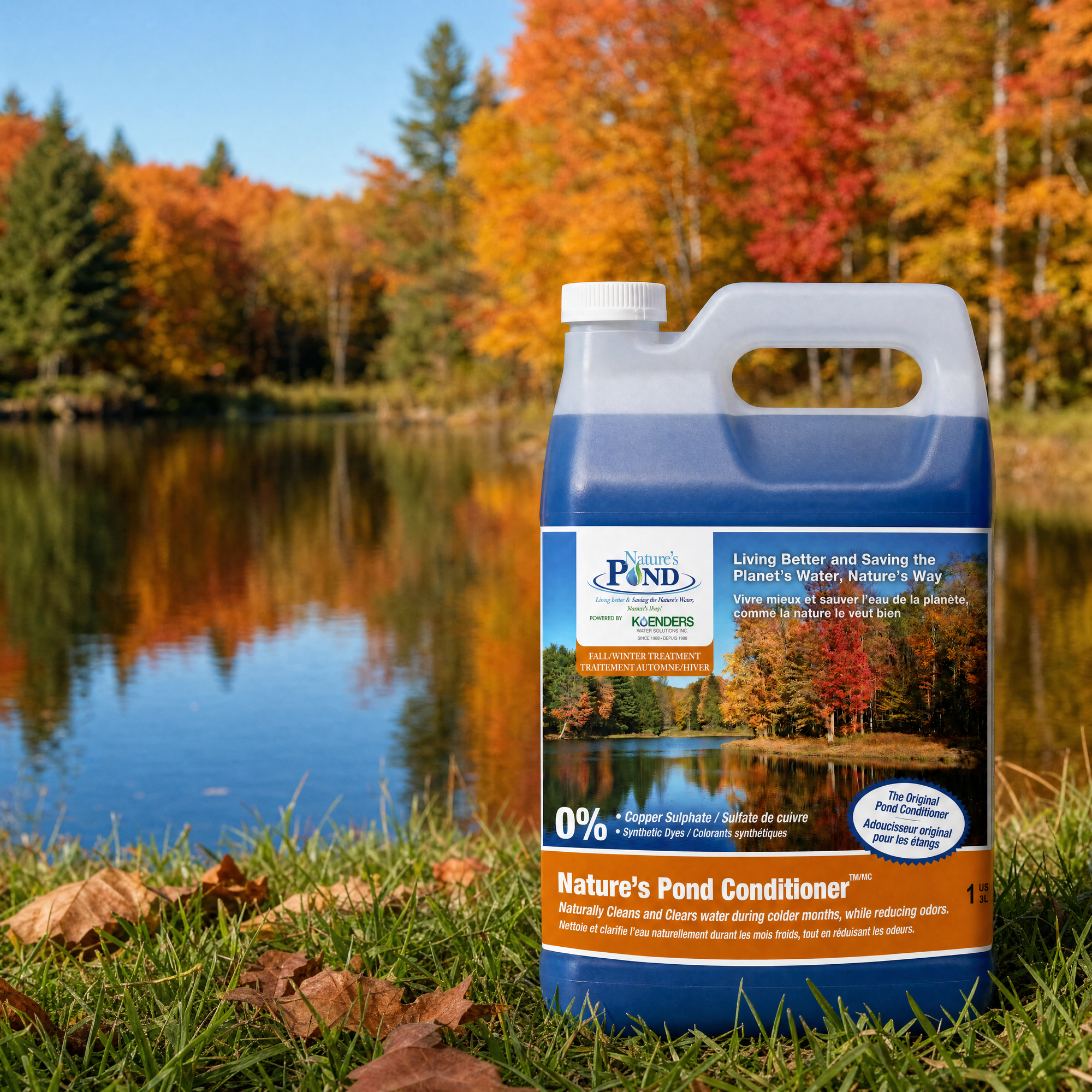
Then add Nature's Pond Conditioner, an all-natural blend of aerobic and anaerobic beneficial bacteria, enzymes, and plant extracts with a food-grade dye. The bacteria consume the excess phosphorus and nitrogen that algae feed on and digest the organic muck that stores those nutrients, converting organics to carbon dioxide and water. It is non-pathogenic and safe for fish, pets, livestock and wildlife when used as directed. The bacteria and the aeration work as a pair: the aerobic bacteria that clear muck fastest need dissolved oxygen to do their job, so the two together do what neither does alone. That is the whole logic of the 3-step Pond Care Program: Renew, Revive, Remove.
For a remote pond or dugout with no power line, you do not need to run a cord to the water. Off-grid windmill aeration runs on wind alone with no ongoing energy cost, so the durable path is open even on pasture and acreage without grid power.
Copper sulfate vs the natural program: the lifetime-cost picture
The honest comparison is not day one, it is over several seasons. Copper sulfate is cheap to buy and gives an instant result, but you buy it again every time the bloom returns, and it returns because the treatment feeds the next one. The natural program costs more to set up, mostly the aeration, then settles into a modest seasonal cost for beneficial bacteria while the nutrient load actually falls year over year.
| Factor | Copper sulfate | Aeration + beneficial bacteria |
|---|---|---|
| How fast | Very fast, clears the bloom in a day or two | Gradual, improves over weeks and across a full season |
| Root cause addressed | No, kills the symptom only | Yes, removes the nutrients and low-oxygen conditions |
| Fish and livestock safety | Narrow margin; overdose and die-off oxygen crash both risk fish | Safe for fish, pets, livestock and wildlife when used as directed |
| Sediment buildup | Copper accumulates in bottom muck, does not break down | Bacteria digest muck; nothing persistent added |
| Effect over time | Diminishing; algae can grow more copper-tolerant | Improves; nutrient load falls season over season |
| Lifetime cost trend | Recurring, every rebound is a new treatment | Mostly upfront, then a modest seasonal maintenance cost |
As a sense of scale, some large shared waterbodies report spending in the range of several thousand dollars a year on repeat algaecide treatment. That is a market example, not our figure, but it shows how quickly a recurring chemical bill adds up next to a one-time aeration system. Over a multi-year horizon, the durable biological approach usually wins on lifetime cost. For a deeper breakdown, see bacteria vs algaecide over time.
How to transition off copper sulfate
You do not have to go cold turkey in the middle of a heavy bloom. The safest transition eases the pond onto its own biology rather than shocking it.
- Get aeration in first. Add bottom-up aeration and let it run, but if the pond is deep and mucky, start gradually in cooler weather so you do not mix oxygen-poor bottom water up too fast and stress fish.
- Physically remove heavy mats. Rake or net out thick surface algae so it does not die, sink and rot in place, which keeps that load out of the sediment.
- Begin beneficial bacteria and dose consistently. Follow the label for your pond, apply a fuller startup dose, then keep up maintenance doses through the warm season instead of treating once.
- Stop reaching for copper. Harsh algaecides knock back the beneficial bacteria you are trying to establish, so the natural program replaces copper rather than running alongside it.
- Reduce the incoming nutrients. Limit fertilizer and runoff near the shoreline, avoid overfeeding fish, and add a natural pond dye to shade the water and slow photosynthesis while the biology catches up.
Expect gradual clearing rather than an overnight fix. You are trading the instant hit and the endless retreatments for water that gets easier to keep clear every season. If you would like help sizing aeration or setting a dosing schedule for your pond, our in-house pond experts will give you a free recommendation.
The bottom line
Copper sulfate is fast, and that is its whole appeal. But fast is not the same as durable. It kills what you can see, then the dead algae rots and refuels the next bloom, copper builds up in the bottom, and fish pay the price when a big die-off crashes oxygen. Chelated copper is a smoother version of the same treadmill, not an exit from it.
The alternative that actually lasts is not another product to pour in during a crisis. It is a program: aerate from the bottom, let beneficial bacteria eat the nutrients driving the algae, and remove what is already there. Slower to start, safer for your fish, and lower cost over the seasons that matter. If you understand what beneficial bacteria does for a pond, the choice gets easy.
Related
- The natural pond algae program The complete root-cause guide to clearing algae
- How aeration starves algae Why bottom aeration prevents blooms
- Bacteria vs algaecide over time Lifetime cost of biological vs chemical control
- Nature's Pond Conditioner Beneficial bacteria that removes algae fuel
- Off-grid windmill aeration Durable aeration with no power line
- The 3-step Pond Care Program Renew, Revive, Remove
FAQ