 Canada
 United States
Aeration guide
Does Aeration Get Rid of Pond Algae? How Bottom Aeration Starves Blooms (and Sizing Your System)
Aeration reduces pond algae as prevention, not an instant kill. Here is how bottom-up oxygen starves blooms, plus how to choose and size the right system.
Last updated August 31, 2026
Yes, aeration reduces pond algae, but as prevention rather than an instant kill. Bottom-up diffused aeration raises dissolved oxygen and circulates the water, which lets beneficial bacteria break down the phosphorus and nitrogen that algae feed on and stops the nutrient-rich bottom layer from fuelling blooms. Pair aeration with beneficial bacteria for lasting control.
The short answer
Aeration does reduce pond algae, but it works as prevention, not as an instant kill. It does not zap a bloom the way an algaecide appears to. Instead, bottom-up aeration raises dissolved oxygen and keeps the whole pond circulating, and that changes the conditions algae need to thrive. Over time, oxygen-loving beneficial bacteria digest the phosphorus and nitrogen that feed algae, and the nutrient-rich bottom layer stops recharging the next bloom.
If you are looking for a green pond to turn clear overnight, aeration will disappoint you. If you want water that stays clearer season after season without pouring chemicals into it, aeration is the single most useful thing you can add, especially when it is paired with beneficial bacteria in the 3-step Pond Care Program.
Aeration does not kill algae. It removes the conditions algae need to keep coming back.
How aeration reduces algae
Algae is a symptom, not the root problem. Blooms take off when three things line up: too many nutrients (excess phosphorus and nitrogen), low dissolved oxygen, and a stagnant, warm water column. Aeration works on all three at once.
Oxygen and circulation let bacteria do the work
The beneficial bacteria that break down organic waste are aerobic, meaning they need dissolved oxygen to function. In a stagnant pond, the bottom goes oxygen-starved and those bacteria stall, so nutrients just sit and recycle. Bottom-up aeration delivers oxygen right to the sediment interface where the muck is, letting bacteria convert that organic load into carbon dioxide and water instead of letting it rot. That is why beneficial bacteria and aeration belong together, not as separate purchases.
Destratification stops the bottom from feeding the bloom
Ponds naturally stratify in summer: warm oxygen-rich water floats on top of cold oxygen-poor water below. That cold bottom layer becomes a nutrient bank, and every time the pond turns over it dumps stored phosphorus back to the surface to feed the next bloom. A bottom diffuser gently mixes the whole column, so the pond stays evenly oxygenated top to bottom and that nutrient bank never builds. It also removes the sharp thermocline that makes a sudden turnover deadly to fish.
Why aeration is prevention, not an algaecide
Aeration does not attack algae cells. It starves them slowly by removing their food and their preferred low-oxygen habitat. That means results are gradual and directional: less muck, fewer and milder blooms, clearer water that holds. It is the opposite of a chemical hit, and it is why the effect lasts instead of rebounding.
Bottom diffuser vs surface fountain: which reduces algae?
This is the question that trips up most pond owners. A decorative fountain looks like aeration, but for algae control the two are not equal.
A bottom diffuser sits on the pond floor and releases fine bubbles that rise through the entire water column, destratifying the pond and oxygenating the sediment where nutrients are stored. A surface fountain mostly agitates the top foot or two of water. It looks great and adds some surface oxygen, but it does little for the deep nutrient cycling that actually drives blooms. If your goal is clearer water rather than a display, choose bottom-up diffused aeration. Fountains are a look-first choice.
| Feature | Bottom diffuser | Surface fountain |
|---|---|---|
| Where it works | Whole water column, including sediment | Top foot or two of water |
| Destratifies the pond | Yes | No, mostly surface |
| Oxygenates the muck layer | Yes | Minimal |
| Effect on algae | Strong, targets the nutrient source | Limited, mainly decorative |
| Best for | Algae, muck and odor control | Visual display, shallow ponds |
Off-grid options: windmill and solar aeration
One of the best things about aeration is that you do not need grid power at the water's edge to run it. The right system depends entirely on your site, so here is an honest comparison of the three.
Windmill aeration
A windmill aerator uses the wind to drive an air compressor, pushing air down to a bottom diffuser with no power line and no electricity bill. It suits open, windy rural sites, acreages and livestock dugouts, and it carries decades of prairie heritage: the parent company, Koenders Water Solutions, has been building windmill aerators in North America since 1988. The honest limit is dead-calm weather, so windy exposure matters. Explore windmill aeration systems if your site catches steady wind.
Solar aeration
Solar aeration runs a compressor off panels and, in many kits, a battery so it can keep going when the sun dips. It suits sunny, low-wind sites and anyone who wants quiet, low-maintenance, off-grid operation. Browse solar aeration systems for panel-powered setups.
Electric aeration
Where grid power already reaches the pond, an electric compressor is the simplest and most consistent option because it runs continuously regardless of wind or sun. It is the default for backyard ponds, koi ponds and any waterbody near a building.
| System | Power source | Best for | Off-grid? |
|---|---|---|---|
| Windmill | Wind | Open, windy rural sites, dugouts, acreages | Yes |
| Solar | Sun (often with battery) | Sunny, low-wind sites wanting quiet operation | Yes |
| Electric | Grid power | Ponds with power at the water, koi and backyard ponds | No |
How much aeration do I need? Sizing basics
Sizing is where guessing costs money. Too little air and the pond never fully destratifies. The right size depends on your pond's surface area, its average depth and its shape, not just one of those numbers.
Surface area, depth and why depth matters
Surface area tells you how much water you are trying to circulate, but depth is what decides how hard that is. A deep pond has more water column to lift and mix, so it needs more air and often more than one diffuser to reach the whole bottom. Long, narrow or multi-lobed ponds may need diffusers placed in more than one spot so no dead zones are left stagnant. For a fuller walk-through of the trade-offs, see our pond aeration guide on benefits, types and sizing.
How to size your system
- Measure your pond's surface area (length times width for a rough rectangle, or average the widths for an irregular shape).
- Estimate the average depth, not just the deepest point, since that drives how much air you need.
- Note your site: is there grid power at the water, steady wind, or good sun exposure?
- Choose a bottom diffuser (for algae and muck) rather than a surface fountain (for display).
- Send those numbers to our pond experts for a free sizing estimate rather than guessing.
Get a free sizing estimate
Rather than reverse-engineering a chart, tell us about your pond and let our in-house pond experts do the math. Contact us for a free sizing estimate and we will match the system to your surface area, depth and site power, so you buy the right size once instead of upgrading later.
Can aeration cause a fish kill? Start slowly in a mucky pond
Aeration is one of the safest things you can do for a pond, but there is one situation to respect. If you switch on strong bottom aeration suddenly in a deep, mucky pond during warm weather, you can mix oxygen-poor bottom water up to the surface too fast and briefly crash dissolved oxygen, exactly the mechanism behind a turnover fish kill.
The fix is simple: start gradually. Run the system for shorter periods at first, or start in cooler weather when the pond holds more oxygen, and let the bottom clear over days rather than minutes. Once the pond is fully mixed and the muck is breaking down, continuous aeration is protective, not risky. If your pond already smells like rotten eggs, that anaerobic bottom is exactly what you want to reverse, carefully.
Aeration alone or the full program?
Aeration removes the low-oxygen conditions that fuel algae, but it works fastest with a nutrient-eating partner. Pairing it with beneficial bacteria draws down the phosphorus and nitrogen store even quicker, and adding a natural shade in high-sun ponds buys the bacteria time. That is the whole idea behind the 3-step program: Renew (condition with beneficial bacteria), Revive (aerate from the bottom up), and Remove (mechanical and biological clean-up).
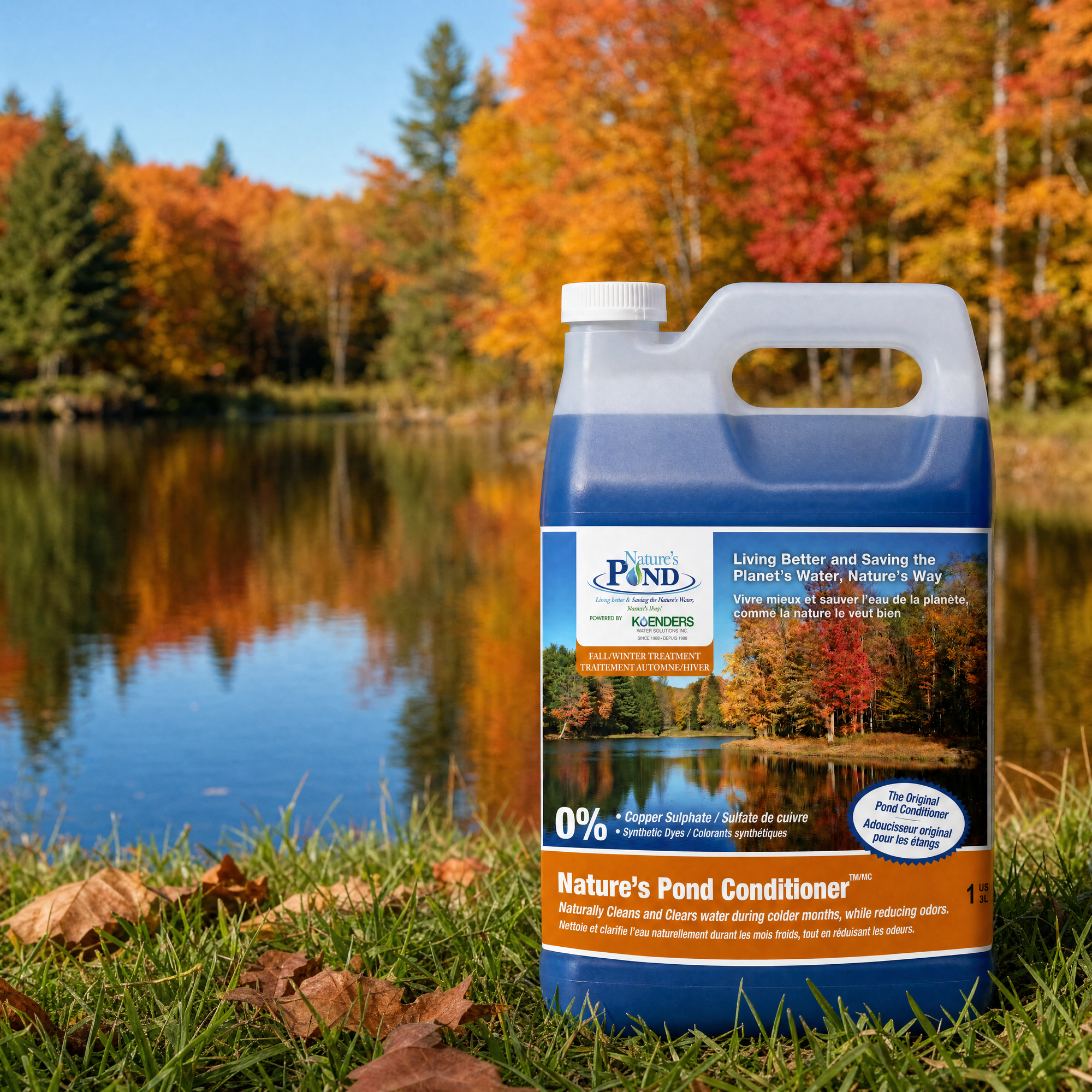
- Renew: add Nature's Pond Conditioner, an all-natural blend of beneficial bacteria, enzymes and plant extracts that converts organics to carbon dioxide and water, and is safe for fish, pets, livestock and wildlife when used as directed.
- Revive: run bottom-up windmill or solar aeration continuously so the bacteria have the oxygen they need.
- Remove: rake out heavy mats and reduce runoff so you are not refilling the nutrient bank.
Weighing this against a chemical routine? Our guide to natural alternatives to copper sulfate explains why the kill-sink-rot-refuel loop makes algaecide a treadmill, while aeration plus bacteria is durable and lower cost over the life of the pond. And if you want the full playbook, start with how to get rid of pond algae naturally.
Frequently asked questions
Related
- Pond calculator Free: surface area, volume and acre-feet
- How to get rid of pond algae naturally The complete natural pond algae program
- Pond aeration guide: benefits, types and sizing Our full aeration overview and sizing basics
- Natural alternatives to copper sulfate Why chemical treatment keeps coming back
- Windmill aeration systems Off-grid, wind-powered aeration
- Solar aeration systems Panel-powered, quiet off-grid aeration
- The 3-step Pond Care Program Renew, Revive, Remove
FAQ