 Canada
 United States
Natural care
Beneficial Bacteria and Enzymes for Ponds: How They Actually Work (and When They Don't)
The honest, mechanism-first guide to how pond bacteria and enzymes digest muck, drive the nitrogen cycle, and why oxygen decides whether they work.
Last updated August 31, 2026
Beneficial bacteria and enzymes break down the organic waste that fuels pond problems. Bacteria digest muck, fish waste, and dead plants, converting organics to carbon dioxide and water, while enzymes speed the first breakdown of tough material. Together they drive the nitrogen cycle and compete with algae for nutrients. They work best in oxygen-rich water, so pair them with aeration.
What beneficial bacteria and enzymes do in a pond
If your pond has gone green, built up a soft muck layer, or started to smell, the cause is almost always the same: too much organic waste and too little oxygen. Beneficial bacteria and enzymes attack that root cause. The bacteria digest the muck, fish waste, and dead plant matter that would otherwise rot on the bottom, converting organics to carbon dioxide and water. The enzymes speed the first breakdown of the toughest material so the bacteria can finish the job. Working together, they drive the nitrogen cycle and compete with algae for the nutrients that feed blooms.
That is the honest headline, and it comes with an honest catch that most product sellers skip: this biology works best in oxygen-rich water. Add bacteria to a stagnant, low-oxygen pond and results stall. That is why the durable approach pairs bacteria with aeration rather than treating either one as a silver bullet. This guide walks through the mechanism step by step, shows what peer-reviewed research actually says, and sets honest expectations for what you will see and when.
Bacteria and enzymes remove the cause of pond problems. Chemicals only knock down the symptom.
The mechanism, step by step
The nitrogen cycle: ammonia to nitrite to nitrate
Every pond runs a nitrogen cycle. Fish waste, uneaten feed, and decaying plants release ammonia, which is toxic to fish even at low levels. One group of beneficial bacteria converts that ammonia to nitrite, and a second group converts nitrite to far-less-toxic nitrate, which plants and algae then take up or which leaves the system through further bacterial processing. When this cycle is healthy and well populated, ammonia and nitrite stay low and your water stays safe. When the pond is overloaded with waste or short on oxygen, the cycle cannot keep up, ammonia climbs, and fish suffer. Adding a concentrated bacteria blend reinforces the nitrogen-processing crew, which is one of the most measurable effects in the research.
If you have a test kit and want to see this in action, our guide on how to read your ammonia and nitrite results shows what healthy numbers look like and what to do when they drift.
How bacteria and enzymes digest muck and sludge
That black, foul-smelling layer on your pond bottom is organic muck: years of leaves, grass clippings, fish waste, and dead algae that settled and never fully broke down. Aerobic bacteria, the kind that use oxygen, digest this organic fraction and convert it to carbon dioxide and water, shrinking the layer over time. Enzymes give the process a head start by cleaving tough, slow-to-digest materials like cellulose, starch, fats, and proteins into smaller pieces the bacteria can consume. The important honest note: bacteria only touch the organic portion of muck. They cannot digest the silt, sand, or clay that washed in, so they reduce the soft, rotting layer, not the mineral base underneath. For a deeper walkthrough, see how to get rid of pond muck without dredging.
Nutrient competition: starving algae
Algae blooms are fueled by excess nutrients, chiefly phosphorus and nitrogen. Beneficial bacteria compete directly with algae for those same nutrients. As bacteria consume the nitrogen and phosphorus tied up in decaying organics and the water column, there is less left over to feed the next bloom. This is why the biological approach is preventive: it does not poison algae, it removes the food supply so algae has less to grow on. It works gradually rather than overnight, which is exactly the tradeoff we will set expectations around below.
Bacteria vs enzymes: what each one actually is
People often use bacteria and enzymes interchangeably, but they are not the same thing, and the difference matters when you choose a product. Bacteria are living microbes that consume waste, reproduce, and carry out the full nitrogen cycle. Enzymes are non-living protein catalysts. They accelerate specific reactions, such as breaking down cellulose or starch, but they do not reproduce and are used up in the reaction. Bacteria naturally secrete their own enzymes as they digest, so adding supplemental enzymes is really about giving the process a faster start, which helps most at spring startup, in cold water, and against a heavy muck load.
| Component | Primary job | Works on | Needs oxygen? |
|---|---|---|---|
| Beneficial bacteria | Digest organics and drive the nitrogen cycle | Muck, fish waste, ammonia and nitrite | Yes, for the fast aerobic strains |
| Enzymes | Catalyze and speed the first breakdown | Tough cellulose, starch, fats, proteins | Not living, but they feed aerobic digestion |
| Bacteria plus enzyme blend | Both jobs, in sequence | The full organic load, start to finish | Works best with aeration |
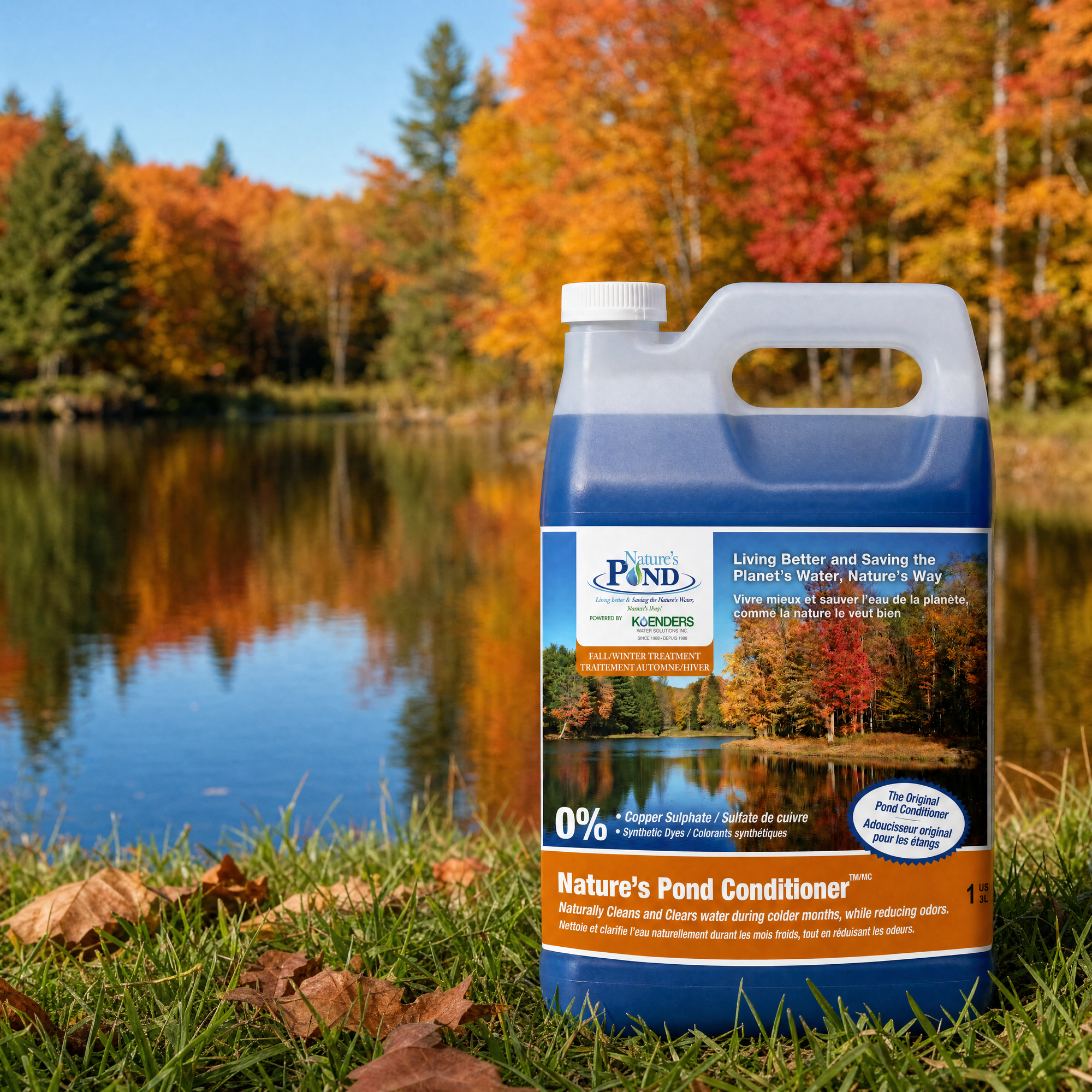
This is why Nature's Pond Conditioner is formulated as a bacteria and enzyme blend: the enzymes kick-start digestion on stubborn organics and the bacteria carry it through, so you are not buying two products to do one job. If you want the deeper comparison, see the difference between pond bacteria and enzymes.
The honest catch: bacteria is only as good as your dissolved oxygen
Here is the truth competitors soft-pedal. The bacteria that digest muck fastest are aerobic, meaning they need dissolved oxygen to do their work. Give them oxygen and they convert organics to carbon dioxide and water quickly and cleanly. Starve them of oxygen and digestion slows, the population thins, and the bottom turns anaerobic instead.
Aerobic vs anaerobic, and why oxygen decides your result
An anaerobic bottom is not just slow, it is actively working against you. Without oxygen, a different set of microbes takes over and produces hydrogen sulfide, the rotten-egg gas, along with methane. That is the smell many pond owners recognize on a hot, still summer evening. Deep, stratified ponds are especially prone to this because the cold bottom layer never mixes with the oxygenated surface. This is the whole reason we treat aeration as inseparable from biology. Bottom-up diffused aeration raises oxygen right at the sediment interface, where the muck actually is, so the aerobic bacteria can work much faster and the bottom stays sweet instead of septic. The full explanation lives in our guide on why beneficial bacteria needs oxygen.
Can you run bacteria with no aeration at all? In a shallow, naturally wind-mixed pond it will still help somewhat. But for muck reduction and reliable results, aeration is the single biggest lever you can pull. Bottom-up diffused aeration outperforms a surface fountain for destratifying a pond and oxygenating the bottom, which is exactly where the organic layer sits.
What the research actually says
A fair question from any skeptic is: where are the studies? The category has real evidence behind it, drawn from aquaculture and bioremediation science rather than from marketing brochures.
Peer-reviewed nitrogen-cycle and Bacillus evidence
Peer-reviewed aquaculture research has repeatedly found that added probiotic and Bacillus bacteria enrich the nitrification and denitrification pathways in pond water and reduce ammonia, nitrite, and total nitrogen. Studies on Bacillus bioremediation of nitrogenous waste show the same directional effect: introduce the right bacteria under adequate oxygen and temperature, and the water's nitrogen burden drops. The US EPA's work on nutrient pollution reinforces the underlying mechanism, confirming that excess nitrogen and phosphorus drive algae blooms and the oxygen depletion that follows. University extension guidance, such as the University of Florida IFAS work on pond muck, likewise points to organic breakdown and aeration as the corrective actions for a mucky bottom.
Where bacteria helps and where it does not
Being honest about the limits builds more trust than overselling. Bacteria reliably helps with the organic side of a pond: digesting muck, lowering ammonia and nitrite, and competing with algae for nutrients over time. It does not dissolve inorganic silt or clay, it does not flip green water clear overnight, and it does little in cold water when the microbes are dormant. Set your expectations against what the biology can actually do, and it rarely disappoints. Expect too much too fast, and you will conclude it failed when it was really just working on the timeline biology works on.
What results to expect, and how long they take
Think in seasons, not days. Water clarity often improves over a few weeks of consistent dosing as bacteria draw down suspended nutrients. Meaningful muck reduction takes months, and it happens fastest when bottom aeration is running the whole time. Odor usually eases as the bottom shifts from anaerobic back to aerobic. None of this is instant, and any product promising overnight results on a mucky, low-oxygen pond is overpromising.
- First few weeks: clearer water as bacteria compete for nutrients, if oxygen and temperature are adequate.
- Through the warm season: the soft organic muck layer thins with consistent dosing plus aeration.
- Ongoing: lower odor and steadier ammonia and nitrite as the aerobic population holds.
- Do not expect: an overnight green-to-clear flip, or any reduction in silt, sand, or clay.
If your pond is still green weeks after dosing, the usual culprits are too little dissolved oxygen, water still below roughly 50F, an underdose, or a recent algaecide or UV clarifier that killed the bacteria you added. For a fuller reckoning with the skeptic's case, read our evidence-based answer on whether pond bacteria treatments work.
How this fits the 3-step Pond Care Program
Bacteria is not a standalone fix, it is one leg of a three-legged stool. Our approach is the 3-step Renew, Revive, Remove program, and each step reinforces the others.
- Renew: condition the water with the beneficial bacteria and enzyme blend to digest organics, drive the nitrogen cycle, and starve algae of nutrients.
- Revive: aerate from the bottom up so the aerobic bacteria have the oxygen they need and the bottom never goes septic.
- Remove: take out the material biology cannot digest, using mechanical tools for weeds, silt, and heavy debris alongside the ongoing biological work.
Run all three together and you address the actual root cause of green water, muck, and odor: excess nutrients, low oxygen, and an anaerobic bottom. Drop any one leg and results wobble.
Is it safe for fish, pets, and livestock?
Nature's Pond Conditioner is an all-natural blend of beneficial bacteria, enzymes, and plant extracts with a food-grade dye. The bacteria are non-pathogenic and the blend is formulated to be safe for fish, pets, livestock, and wildlife when used as directed. It is worth clearing up a common confusion: beneficial bacteria that you add is not the same as harmful blue-green algae, the cyanobacteria that can produce toxins. Adding beneficial bacteria and aeration actually helps prevent the nutrient conditions that drive harmful blooms. As with any product, follow the current product label for dosing and for any swimming or re-entry guidance.
This safety profile is a big part of why acreage and rural pond owners choose the biological route in the first place. If that is you, see natural pond care for acreages for how the program fits a larger rural waterbody.
Bacteria vs the chemical shortcut
The most common alternative is a copper algaecide, and it is worth understanding the tradeoff. Copper sulfate kills algae fast, but the dead algae then sinks, rots, and releases the very nutrients that feed the next bloom, so you dose again and again while copper accumulates in the sediment. Beneficial bacteria plus aeration removes the nutrients instead, so it is slower but durable and usually the lower cost over multiple seasons. We lay out the full comparison in bacteria vs algaecide and the lifetime cost of each. One practical warning: because copper-based algaecides and UV clarifiers kill bacteria along with algae, running them alongside a bacteria program works against itself.
Next steps
Beneficial bacteria and enzymes are the honest, root-cause foundation of a clear, low-odor pond, as long as you give them oxygen and warm-enough water and dose consistently. Start with Nature's Pond Conditioner, our bacteria and enzyme blend, pair it with aeration through the 3-step Pond Care Program, and set your expectations in seasons rather than days.
Not sure how much you need, or whether your pond needs aeration to make the bacteria perform? Contact our in-house pond experts for a free recommendation and we will help you size the program to your surface acres, average depth, and how your pond is used.
Related
- Why beneficial bacteria needs oxygen The aeration pairing that decides your result
- Do pond bacteria treatments work? The honest, evidence-based answer
- Pond bacteria vs enzymes What each one is and whether you need both
- Get rid of pond muck naturally Shrink the muck layer without dredging
- Nature's Pond Conditioner The bacteria and enzyme blend
- The 3-step Pond Care Program Renew, Revive, Remove
FAQ