 Canada
 United States
Natural care
Do Pond Bacteria Treatments Actually Work? An Honest, Evidence-Based Answer
The honest answer on whether pond bacteria treatments work, what peer-reviewed research shows, when they fail, and how to run your own before-and-after test.
Last updated August 31, 2026
Yes, pond bacteria treatments work when three conditions are met: enough dissolved oxygen, water above roughly 50F, and a full dose applied consistently. Peer-reviewed aquaculture studies show added bacteria lower ammonia, nitrite, and total nitrogen and digest organic muck. Most failures trace to low oxygen, cold water, underdosing, or an algaecide that killed the bacteria.
Do pond bacteria treatments actually work?
If you have been staring at a green, mucky pond wondering whether a jug of beneficial bacteria is real science or clever marketing, you are asking exactly the right question. The honest answer is yes, they work, but only under conditions the label rarely spells out. Added bacteria measurably lower the nitrogen waste that fuels algae and they digest the organic muck rotting on your pond bottom. What they do not do is flip green water clear overnight, and they stall completely if your pond is starved of oxygen or your water is still cold.
This page is the skeptic's version. We will make the fair case against pond bacteria, then show what the peer-reviewed evidence actually says, when treatments genuinely fail, and how to run a simple before-and-after test so you can judge the results in your own pond rather than taking anyone's word for it. If you want the deeper mechanism first, start with how beneficial bacteria actually works.
Bacteria is not snake oil, and it is not magic. It is a slow biological tool that only performs when oxygen, temperature, and dosing are all on your side.
The fair version of the skeptic's case
Most product sellers never engage the honest objections, which is exactly why the objections persist. Here are the two strongest, stated fairly.
"Bacteria are already everywhere, so why pay to add more?"
This is true and it deserves a straight answer. Every pond already hosts native bacteria. The problem is that in a nutrient-rich pond loaded with fish waste, runoff, grass clippings, and dead plant matter, the native population is simply overwhelmed by the organic load. Adding a concentrated, targeted blend tips the balance toward faster aerobic digestion, and it matters most early in the season before native populations have rebuilt after winter. You are not buying bacteria that does not exist in nature. You are buying a head start and a larger working crew.
"Where are the independent studies?"
Also fair. A lot of pond-care marketing cites nothing at all, and the vacuum makes the whole category feel like hype. The good news is that the underlying microbiology has been studied extensively in aquaculture, where water quality is a commercial life-or-death issue for fish farms. The research does not usually test one specific retail jug, but it does test the strains and mechanisms those products rely on, and the findings are consistent enough to trust the mechanism.
It is worth being precise about what that means. The reasonable skeptic is not wrong to want product-specific, independent trials, and few pond brands can point to one. But the burden of proof for "does adding beneficial bacteria measurably improve pond water chemistry?" is met by the broader body of nitrogen-cycle and bioremediation science. The narrower question, "is this exact jug worth the price versus that one?", is genuinely harder to answer from studies alone, which is why the before-and-after test later on this page matters so much. You can settle the specific case in your own pond in a single season.
What the peer-reviewed evidence shows
The clearest evidence comes from aquaculture and bioremediation research, where the goal is the same as yours: keep water clean by processing nitrogen waste and organic matter faster than it accumulates.
Nitrogen-cycle enrichment and lower ammonia and nitrite
Peer-reviewed studies of probiotic and beneficial bacteria added to pond water show enrichment of the nitrogen-processing pathways, the same nitrification and denitrification steps that convert toxic ammonia into progressively safer forms. In practice that shows up as lower ammonia, nitrite, and total nitrogen in treated water. Since ammonia and nitrite are directly toxic to fish and nitrogen is a primary driver of algae blooms, this is the mechanism that matters most. The US EPA notes that excess nitrogen and phosphorus are what fuel algae and the oxygen depletion that follows, so anything that removes nitrogen from the water is working on the root cause.
Bacillus bioremediation of nitrogenous waste
Bacillus strains, the workhorses of most pond and aquaculture blends, have a documented ability to break down organic waste and process nitrogenous compounds. Bioremediation research shows these bacteria digesting the organic load and supporting the nitrogen cycle rather than merely masking a problem. This is the same reason wastewater operators lean on biology instead of endless chemical dosing: it addresses the source. The University of Florida's IFAS extension similarly identifies organic muck accumulation and low oxygen as the core pond problems that biological and aeration corrective actions target.
What the evidence does not support is a precise, guaranteed number for your specific pond. We will not quote a muck-reduction percentage or a "works twenty times faster" figure, because those depend entirely on your oxygen, temperature, and organic load. The honest claim is directional and well-supported: added bacteria lower nitrogen waste and digest organics when conditions allow.
When bacteria genuinely fails (and it is usually not the bacteria)
Here is the part sellers skip. When a treatment disappoints, the bacteria itself is rarely the culprit. Four conditions cause almost every failure.
Low oxygen, cold water, underdosing, and chemical die-off
- Low dissolved oxygen. The bacteria that digest muck fastest are aerobic, meaning they need oxygen. In a stagnant, low-oxygen pond they slow down or die back and the bottom turns anaerobic, producing rotten-egg gas instead of clean digestion. This is the single biggest reason results stall, which is why we cover the oxygen pairing that decides your result in its own guide.
- Cold water. Most blends are warm-water strains that go dormant below roughly 50F. Dosing into cold spring water with the wrong formula wastes product. Wait until the water warms, or use a cold-water-rated approach at the shoulders of the season.
- Underdosing. A single light dose into a heavy organic load is like sending one worker to clear a warehouse. Underdosing is the most common mistake and the most likely reason a treatment appears to do nothing.
- Chemical die-off. Copper algaecides and UV clarifiers kill the bacteria you just paid for. This is why algaecide kills the bacteria you paid for and why the two approaches quietly work against each other.
| Factor | Works | Stalls |
|---|---|---|
| Dissolved oxygen | Aerated, oxygen at the bottom | Stagnant, oxygen-starved |
| Water temperature | Above roughly 50F for warm-water strains | Cold water, strain dormant |
| Dosing | Full, consistent, through the season | One light underdose |
| Recent chemicals | None | Algaecide or UV clarifier killed it |
Read the table honestly and a pattern appears: three of the four failure modes are about the pond, not the product. Fix oxygen, temperature, and dosing and the bacteria will do its job.
What honest results look like, and the timeline
Set expectations in seasons, not weekends. Water clarity often improves within a few weeks as the bacteria begin consuming suspended nutrients and out-competing algae. Meaningful muck reduction on the bottom takes months of consistent dosing, and it happens fastest with bottom aeration running the whole time. If you are expecting a chemical-style overnight knock-down, you will be disappointed, and that mismatch in expectations is where most "it didn't work" reviews actually come from.
A realistic first season looks like this: cloudier or slightly discoloured water settling toward clearer within weeks, less odor as the bottom stays aerobic, and a gradual softening of the muck layer you can feel underfoot by late summer. It compounds year over year as the organic backlog shrinks. That patience is exactly why bacteria plus aeration ends up cheaper over multiple seasons than a chemical you re-buy every few weeks.
There is also a mechanism reason the timeline is gradual rather than instant. Bacteria work by consuming the phosphorus and nitrogen that algae also feed on, so instead of killing the visible bloom they slowly starve the conditions that create it. A chemical algaecide inverts that: it kills the algae fast, but the dead algae then sinks, rots, and releases those same nutrients back into the water to feed the next bloom. One approach removes the fuel, the other keeps refuelling. Slower and durable beats fast and repeating, but only if you understand up front which one you bought.
How to run your own before-and-after test
You do not have to trust marketing or reviews. You can measure. Here is a simple protocol that isolates whether the treatment is working in your specific pond.
- Record a baseline before you dose. Note water clarity (a photo works, or a simple Secchi-style depth check), any odor, and if you have a test kit, your ammonia and nitrite readings.
- Get oxygen right first. Start or confirm bottom-diffused aeration is running, because without oxygen you are testing a stacked deck against yourself.
- Wait for the water to warm past roughly 50F if you are using a warm-water blend.
- Apply the full labeled dose for your pond size, then keep to the label's maintenance schedule. Do not underdose to "see if a little works."
- Re-measure at two weeks, one month, and end of season using the same method and, ideally, the same spot and time of day.
- Compare. Clearer water and lower ammonia and nitrite are the signal. If nothing moved, check the four failure modes above before blaming the bacteria.
This is also how you learn how much product your pond actually needs. If you would rather not guess at dosing and conditions, our in-house pond experts will give you a free recommendation for your acreage, depth, and problem.
The bottom line
Pond bacteria treatments are not a waste of money, and they are not magic. They are a legitimate biological tool backed by real aquaculture and bioremediation research, and they reliably lower nitrogen waste and digest organic muck when your pond has enough oxygen, warm-enough water, and a full, consistent dose. When people say bacteria "didn't work," the honest diagnosis is almost always one of those three conditions, not the bacteria.
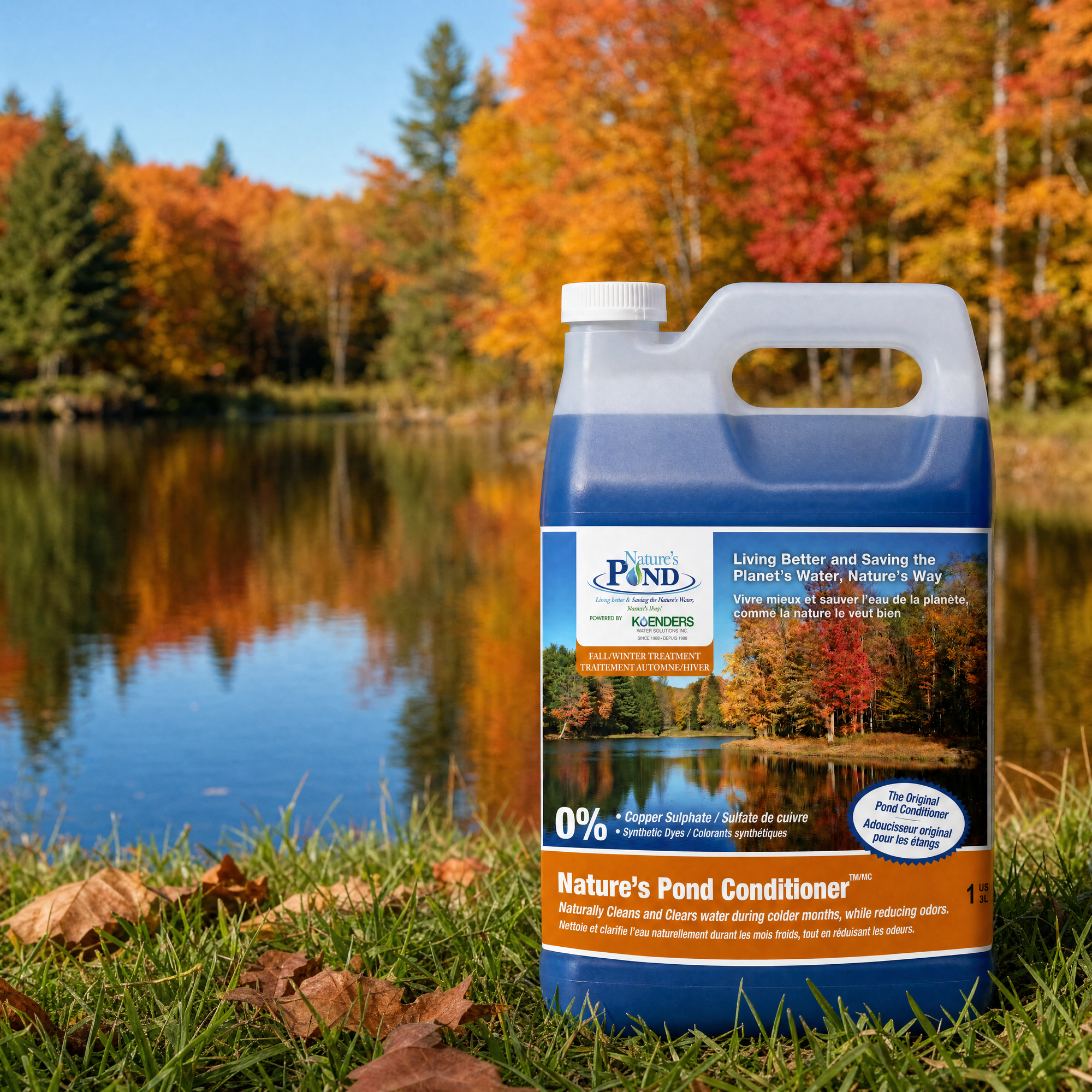
That is exactly why we do not sell bacteria as a standalone miracle. Nature's Pond Conditioner is one part of the 3-step Pond Care Program: Renew the water with the bacteria and enzyme blend, Revive it with aeration so that bacteria can actually work, and Remove the built-up muck mechanically and biologically. Get those three working together and the results speak for themselves.
Still deciding between the natural route and a chemical one? See whether the natural approach really beats algaecide over time before you buy either.
Related
- How beneficial bacteria actually works The deep mechanism and nitrogen cycle guide
- Why beneficial bacteria needs oxygen The aeration pairing that decides your result
- Bacteria vs algaecide Lifetime cost of biological versus chemical control
- Nature's Pond Conditioner The all-natural bacteria and enzyme blend
- The 3-step Pond Care Program Renew, Revive, Remove
- Get a free recommendation Our pond experts size it for your pond
FAQ