 Canada
 United States
Seasonal guides
Why Your Pond Turns Green Every Summer, and How to Stop the Bloom
Every July your pond goes green again. Here is why summer triggers the same algae bloom, and how to break the cycle naturally instead of chasing it.
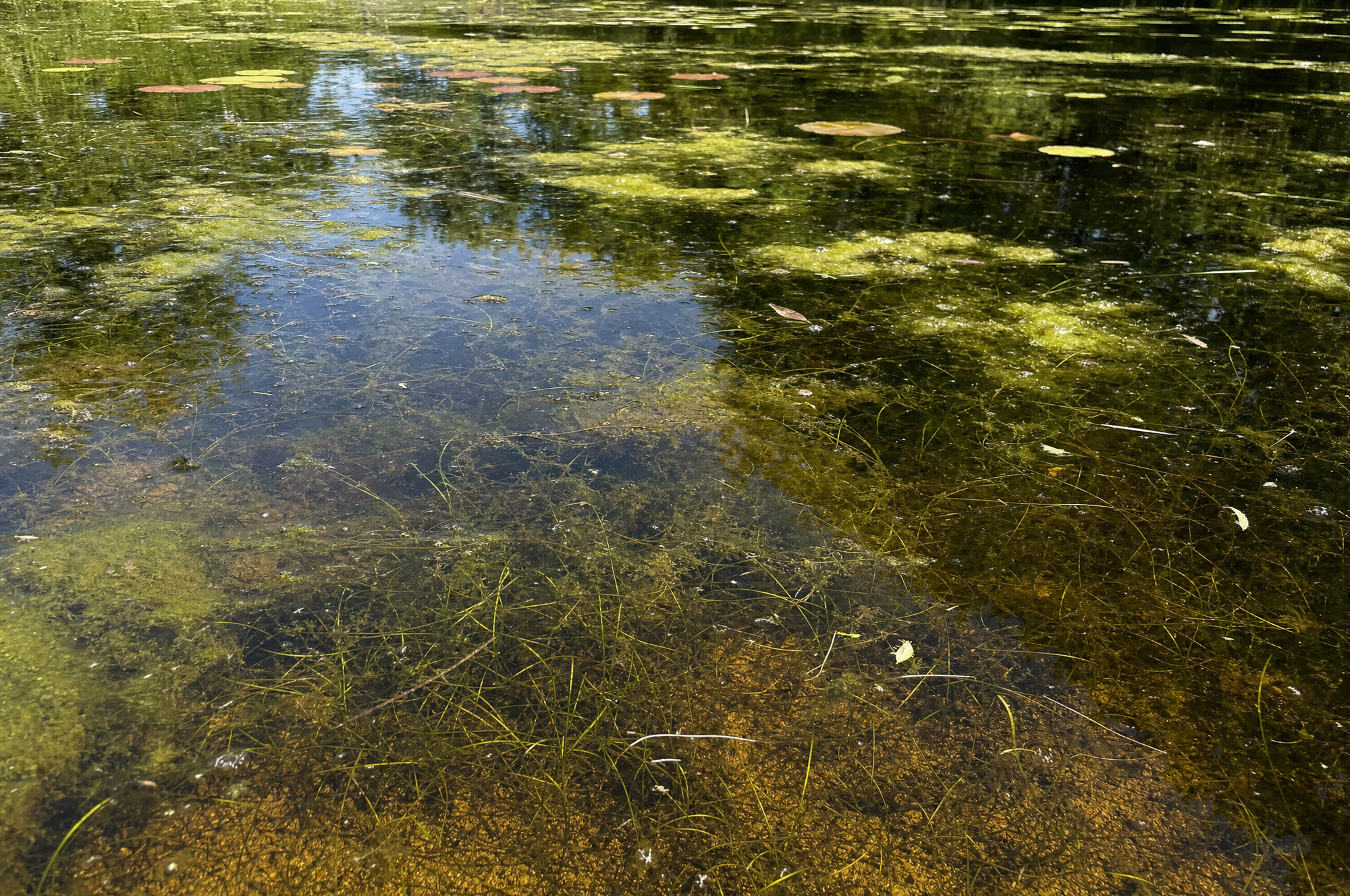
Ponds turn green in summer when warm, calm, low-oxygen water lets phosphorus-rich bottom sediment fuel rapid algae growth. Because algae bloom fast once those conditions align, the durable fix is prevention: aerate to raise oxygen and mix the water, add beneficial bacteria to reduce the nutrient-rich muck, and use pond dye to limit sunlight.
Why does my pond turn green every summer?
If your pond goes clear in spring and then turns pea-soup green every July, you are not doing anything wrong. You are watching a predictable seasonal recipe come together. Warmth, calm water, sunlight, and a bottom loaded with nutrients are all an algae bloom needs, and summer delivers all four at once. The green color is usually suspended single-celled algae multiplying fast in response to heat and excess nutrients.
The frustrating part is the recurrence. You can clear the water, but if the underlying nutrients and low-oxygen conditions are still there, the bloom simply comes back the next warm, still week. That is why chasing the symptom every summer feels like a losing battle. The lasting answer is to change the conditions that make your pond bloom-prone in the first place, using the same root-cause approach behind the 3-step Pond Care Program.
Clearing green water treats this week's bloom. Changing the conditions that cause it is what stops next summer's.
The summer recipe: phosphorus, warmth, low oxygen, and calm water
Green water is not a color problem, it is a nutrient and oxygen problem. Four factors stack up in summer to drive the bloom, and understanding them is the key to prevention.
Excess phosphorus and nitrogen (the fuel)
Algae are plants, and like any plant they grow when fed. The nutrients that feed them, mainly phosphorus and nitrogen, come from decaying leaves, grass clippings, fertiliser runoff, fish waste, and the layer of organic muck on the pond bottom. Phosphorus is usually the limiting nutrient, meaning algae need very little of it to bloom. Even low background concentrations can be enough, which is why simply skimming the surface never fixes the recurrence: the fuel is stored in the sediment. Reducing that stored nutrient load is the durable lever, and it is the reason a bloom that looks the same every year keeps coming back until you address the bottom.
Warmth and low dissolved oxygen
Warm water holds less dissolved oxygen than cold water, and summer heat pushes surface temperatures up right when biological demand for oxygen is highest. As the pond warms, it also tends to stratify into a warm top layer and a cold, oxygen-starved bottom layer. That low-oxygen bottom is where trouble brews: anaerobic conditions let the sediment release stored phosphorus back into the water, handing the algae a fresh meal. Low oxygen and nutrient release feed each other.
Calm water and long daylight
Still, sunlit water is an algae greenhouse. Long summer days deliver the light algae need for photosynthesis, and calm conditions let a bloom sit undisturbed at the warm, bright surface. Wind and mixing work against algae; dead-calm heat waves work for them. This is why blooms so often appear during the hottest, stillest stretch of the year.
Why it seems to happen overnight
Many pond owners describe waking up to a green pond as if it happened in a single night. In a sense it did. Once heat, calm water, sunlight, and available nutrients all align, algae can multiply extremely quickly, so the visible green is the fast final step of a process that was building for weeks. The conditions loaded the spring; summer just pulled the trigger.
How to stop your pond turning green, naturally
Because green water is driven by nutrients plus low oxygen plus calm, warm conditions, the natural fix works on those same drivers rather than on the color. Three levers do most of the work, and they are strongest used together. This is the anti-chemical approach at the heart of our natural pond care philosophy, and it avoids the boom-and-bust cycle that copper-based algaecides create.
| Lever | What it does | How it prevents blooms |
|---|---|---|
| Aeration | Raises dissolved oxygen and mixes the water column | Removes the low-oxygen bottom layer that releases stored phosphorus, and favours beneficial bacteria over algae |
| Beneficial bacteria | Digests the nutrient-rich muck and organic matter | Lowers the phosphorus and nitrogen supply feeding the bloom at its source |
| Pond dye | Tints the water to filter sunlight | Limits the light algae need for photosynthesis, especially deeper in the water |
Aerate to raise oxygen and mix the water
Aeration is the foundation. Adding oxygen and circulation breaks up the summer stratification that starves the bottom of oxygen, which in turn slows the sediment from releasing phosphorus. A well-oxygenated pond also favours the beneficial, aerobic bacteria that compete with algae, and it makes the whole water column less hospitable to a bloom. Bottom-up diffused aeration outperforms a surface fountain for destratifying a pond, because it mixes from the bottom where the low-oxygen layer forms. If your pond has no shoreline power, off-grid options exist: windmill aeration runs on wind alone, and solar aeration runs on daylight, both driving the same bottom diffusers. This is the Revive step of the program.
Add beneficial bacteria to cut the nutrient supply
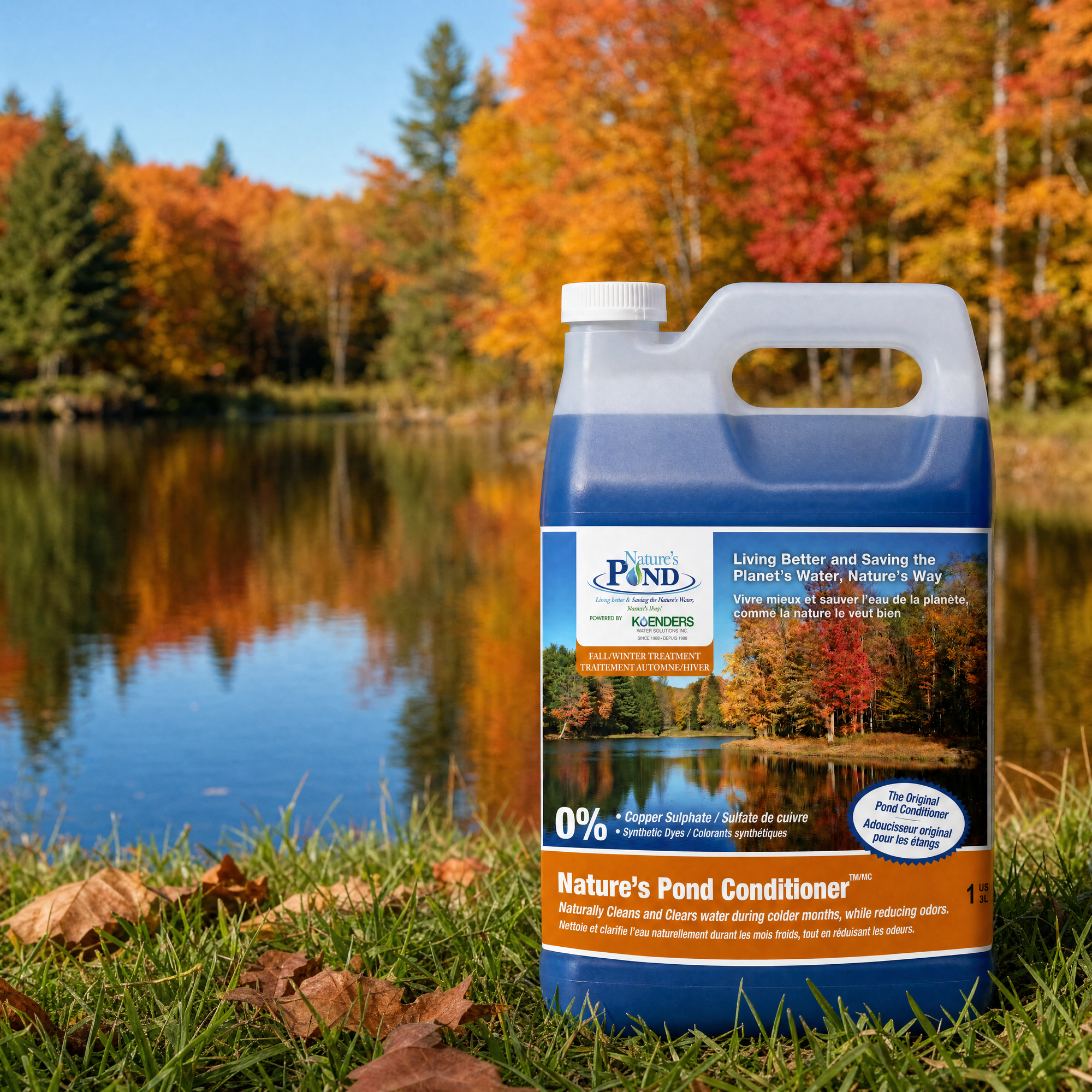
Aeration sets the table; beneficial bacteria do the eating. Nature's Pond Conditioner is an all-natural blend of aerobic and anaerobic beneficial bacteria, enzymes, and plant extracts that digest the organic muck on your pond bottom, converting those solids to carbon dioxide and water. As the muck shrinks, so does the stored phosphorus that fuels blooms. It is non-pathogenic and safe for fish, pets, livestock, and wildlife when used as directed, which is the whole point of the natural approach: you are removing the algae's food, not poisoning the pond. This is the Renew step, and it works fastest in warm, well-aerated water, exactly the summer conditions that also favor algae, so consistent dosing through the season matters.
Use pond dye to limit the light
The third lever is light. A natural pond dye tints the water so less sunlight reaches deeper into the pond, limiting the photosynthesis algae depend on. Dye is not a standalone cure, but it buys the bacteria and aeration time to work by slowing algae growth, and it improves the pond's appearance immediately. To dose it, calculate your pond volume in acre-feet: surface acres multiplied by average depth in feet, divided by four gives your acre-feet figure. Dye pairs naturally with the other two levers as part of the Remove and prevention picture.
A simple seasonal prevention timeline
The reason your pond blooms every summer is that most owners only react once the water is already green. Prevention means getting ahead of the recipe. Here is the season-by-season rhythm that breaks the cycle:
- Early spring, as the water warms: start aeration and begin dosing beneficial bacteria so the biology is established before the first warm spell. Getting a head start here is the single biggest factor in avoiding the July bloom.
- Late spring: apply pond dye to limit light as daylight lengthens, and keep aeration running continuously.
- Summer: maintain consistent bacteria dosing and keep aeration on around the clock through heat waves and calm stretches, when blooms are most likely.
- Fall: keep aerating as the water cools to help digest the season's organic load and reduce next year's nutrient bank.
- Every season: keep leaves, clippings, and fertiliser runoff out of the pond so you are not restocking the fuel supply.
The theme across all of it is proactive, not reactive. A pond you manage before it blooms stays clear far more cheaply and reliably than one you rescue after it turns green. For a personalised plan sized to your pond, our in-house pond experts will give you a free recommendation.
Why not just use copper sulfate?
Copper sulfate and other algaecides are the most common summer reflex, and they are exactly why so many ponds turn green again a few weeks later. Copper kills the algae, but the dead algae then sinks to the bottom, rots, and releases its nutrients back into the water, refuelling the next bloom. You clear the water for a few days and feed the following bloom at the same time. Over a season that becomes a treadmill of repeat treatments. The aeration-plus-biology approach costs less over the life of the pond because it lowers the nutrient load instead of recycling it. We walk through that math in detail in our comparison of bacteria versus algaecide, and it is the core reason a natural program is the durable answer to recurring green water.
Bringing it together
Your pond turns green every summer because warmth, calm water, sunlight, and stored phosphorus keep aligning, and clearing the symptom does nothing to change that. Break the cycle by working on the causes: aerate to raise oxygen and stop the sediment from feeding algae, add beneficial bacteria to shrink the muck that stores the nutrients, and use pond dye to limit the light. Do it proactively, starting in spring, and the July green stops being inevitable. If you would like help sizing the right combination for your pond, talk to our pond experts for a free, no-pressure recommendation.
Written by
Nature's Pond Care Team
Pond care experts
Keep reading
Related articles
Seasonal guides
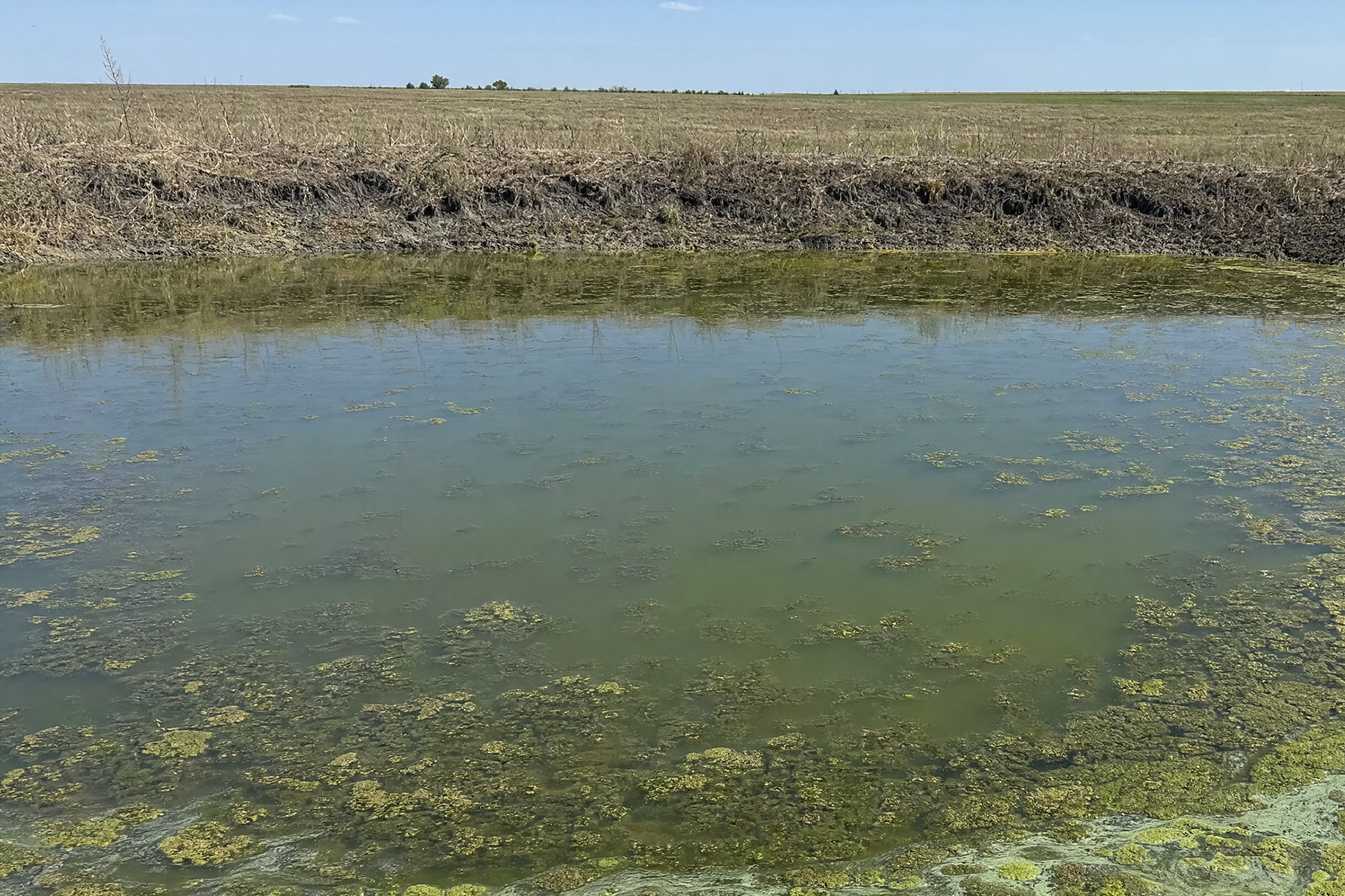
Farm Pond Algae Turning Green Every Summer? Livestock Water Safety and the Natural 3-Step Program
Why farm ponds go green every late summer, whether the algae is safe for your cattle, and the durable off-grid way to clear a big pond without harsh chemicals.
Nature's Pond Care Team9 min read
Seasonal guides
The Complete Seasonal Pond Care Calendar
A simple month-by-month rhythm for a healthy pond, what to do in spring, summer, fall and winter to stay ahead of problems.
Nature’s Pond Care Team8 min read
Seasonal guides
Fall Pond Prep: Protecting Water Quality Through Winter
What you do in fall decides how your pond looks next spring. A short checklist to set your water up for a healthy winter.
Nature’s Pond Care Team7 min read
Get started
Put it into practice
Start with the conditioner, add aeration, and let nature do the rest.