 Canada
 United States
Diagnostic guide
Blue-Green Algae (Cyanobacteria): How to Spot Toxic Pond Blooms and Protect Dogs, Kids and Livestock
How to tell toxic blue-green algae from harmless green or string algae, the warning signs in dogs and cattle, and what to do the moment you see a paint-like scum.
Last updated August 31, 2026
Toxic blue-green algae, or cyanobacteria, looks like spilled paint, pea-soup scum, or a blue-green film on the water, not the hair-like strands of nuisance algae. It can produce microcystin and anatoxin, which are dangerous to dogs, livestock and people. If a bloom looks like this, keep everyone away from the water and call a veterinarian right away.
The 30-second answer
Not all pond algae is dangerous, but one kind can be deadly. Blue-green algae, properly called cyanobacteria, is a bacteria that can produce toxins such as microcystin and anatoxin. A toxic bloom typically looks like spilled paint, thick surface scum, or a pea-soup or turquoise film, and it can sicken or kill a dog within hours and has been linked to livestock deaths.
You cannot confirm toxins by sight alone, so the safe rule is simple: if a bloom looks like paint or scum on the surface, treat it as toxic until proven otherwise. Keep dogs, children and livestock away from the water and the shoreline, and contact a veterinarian or your local health authority. The rest of this guide shows you how to tell the toxic kind from ordinary nuisance algae, what the warning signs look like, and how to lower the risk of blooms over the long term.
When in doubt, keep everyone out. You can always confirm a bloom is safe later, but you cannot undo an exposure.
How to tell if your pond algae is toxic
Most of what turns a pond green is harmless nuisance algae. Cyanobacteria is different in look, texture and behavior, and learning those differences is the single most useful safety skill a pond owner can have. Start by comparing what you are seeing against the three common types below, then use the simple field checks that follow.
What blue-green algae looks like
Toxic blooms tend to sit on or just under the surface as a film, foam or streaky scum rather than as material you can pick up. Colours range from bright green and turquoise to blue-green, and a heavy bloom can look like someone poured paint or dumped grass clippings across the water. It often collects on the downwind side of the pond where the breeze pushes it, and it can carry a musty or septic smell. Because cyanobacteria is a bacteria and not a true plant, it does not form the fibres or mats you associate with green slime.
Two simple field checks
Neither of these tests confirms toxins, but they help you tell a scum-type bloom from harmless stringy algae so you know when to be cautious.
- The stick test. Dip a stick into the bloom and lift. Nuisance string (filamentous) algae clings and lifts out in green, hair-like strands. A cyanobacteria bloom slides off and will not gather on the stick, because it is a suspension of tiny cells, not fibres.
- The jar test. Scoop some water into a clear jar and let it stand for a few hours in a safe spot away from pets. Green (planktonic) algae stays evenly suspended and green. Many cyanobacteria form a blue-green or paint-like layer that floats to the top, since the cells can control their buoyancy.
When to assume the worst
Some toxic blooms hide in plain sight, and a pond can look fine one day and scummy the next after a warm, calm spell. Assume a bloom may be toxic and keep everyone away if you see any of these: a paint-like or turquoise sheen, a thick surface scum or foam collecting on the downwind edge, a sudden musty or foul smell, or dead fish, frogs or birds near the water. If you are unsure, your provincial or state environment or health department can advise on testing.
| Feature | Blue-green algae (cyanobacteria) | Green / string algae (nuisance) |
|---|---|---|
| Appearance | Paint-like film, scum, foam, turquoise sheen | Cloudy green water, or hair-like strands and mats |
| Texture (stick test) | Slides off, no fibres to lift | Green water stays cloudy; string algae lifts in strands |
| Where it sits | On or just under the surface, downwind edge | String algae anchors to rocks and edges; green tints the whole pond |
| Smell | Often musty, septic or foul | Usually little smell, or a faint earthy note |
| Main risk | Can be genuinely toxic to animals and people | Nuisance; risk is mainly a die-off oxygen crash |
| What to do | Keep everyone away, call a vet, do not shock-treat | Remove mechanically, then fix the root cause |
Why blue-green algae is dangerous
Cyanobacteria can produce two broad families of toxin. Microcystins are liver toxins that damage liver cells, while anatoxins are fast-acting nerve toxins. Not every bloom produces toxins, and levels can rise and fall day to day, which is exactly why sight alone is not enough to judge safety. A bloom that looked harmless in the morning can become dangerous after a hot, still afternoon concentrates the cells along one bank.
Animals are usually poisoned by drinking the water or by licking toxin-laden scum off their fur after wading or swimming. Because dogs will happily drink from and swim in exactly the kind of warm, scummy water that grows cyanobacteria, they are the most common pet victims. For authoritative medical guidance on identification and exposure, veterinary and public-health sources such as Cornell University's College of Veterinary Medicine and the U.S. Centers for Disease Control and Prevention maintain current information on cyanobacteria and harmful algal blooms.
Warning signs in dogs
Cyanobacteria poisoning in dogs can move quickly, sometimes within minutes to hours of exposure, so do not wait to see whether symptoms pass. If your dog has been in or near a suspicious pond and shows any of the signs below, treat it as an emergency and call a veterinarian immediately. Tell them you suspect blue-green algae, because time matters and they may want to see the animal at once.
- Vomiting, diarrhea or drooling
- Weakness, stumbling, or trouble standing
- Muscle tremors, twitching or seizures
- Difficulty breathing
- Collapse or sudden unresponsiveness
There is no home antidote and no product that makes contaminated water safe to drink on the spot. The only right response to a suspected exposure is prompt veterinary care. If you can do so safely, rinse visible scum off your dog's coat with clean water while wearing gloves, and keep the animal from licking itself on the way to the clinic.
Risk to cattle, horses and other livestock
Livestock are exposed the same way pets are: by drinking from a pond during a bloom. Cattle and horses have died after drinking from waterbodies carrying toxic blooms, and because a thirsty animal may drink a large volume quickly, the risk on a stock pond is serious. University extension programs, including beef-focused extension services, publish guidance on recognising and responding to blooms on livestock water.
If a stock pond shows a paint-like or scummy bloom, fence animals off from it and provide an alternate water source until the water clears and you are confident it is safe. Do not assume a pond is fine just because animals have always drunk from it; the same pond can be safe most of the year and dangerous during a late-summer bloom. Producers managing pasture water can read more about keeping herd water clean on our farms and ranches sector page.
A pond that is safe in June can be dangerous in August. Judge the water by what it looks like today, not by last year.
What to do if you suspect a toxic bloom
- Keep everyone away. Pull dogs, children and livestock back from the water and the shoreline spray, and do not let anyone swim, wade or fish.
- Call for help. Contact a veterinarian right away if any animal was exposed, and notify your provincial or state environment or health authority, who can advise on testing.
- Do not shock the bloom. Resist the urge to dump a fast algaecide or copper into an active toxic bloom. Killing the cells suddenly can rupture them and release stored toxin into the water, making a bad situation worse.
- Provide alternate water. For livestock, set up a trough or tank from a clean source until the pond is confirmed safe.
- Document it. Photos of the bloom and the date help a vet, a lab or a health authority assess the situation.
Why you should not reach for a fast chemical kill
This is the single most important safety point on the page. A copper or peroxide algaecide can knock down a bloom quickly, but during an active cyanobacteria event that speed is a liability: bursting the cells can release the very toxins you are trying to avoid, and the dying bloom then rots and pulls oxygen out of the water, which can trigger a fish kill on top of the toxin risk. The safe move during an active toxic bloom is to keep everyone out and let a professional or health authority guide next steps, not to treat it yourself.
How to lower the risk of toxic blooms long term
Cyanobacteria thrives on the same conditions that drive every other algae problem: excess nutrients (phosphorus and nitrogen), warm stagnant water, and low dissolved oxygen with anaerobic bottom sediment. You cannot control the weather, but you can take away the fuel and the stagnation, which is the durable way to make toxic blooms less likely rather than reacting to them each summer.
Add oxygen and circulation with aeration
Stagnant, stratified water is where cyanobacteria flourishes, so bottom-up aeration is a foundation of prevention. Diffused aeration from the pond floor circulates the whole water column, raises dissolved oxygen and breaks up the calm, warm surface layer that blooms favor. For remote farm ponds and dugouts with no power at the water, our off-grid windmill aeration runs on wind alone, and you can read how aeration works against algae in our guide on whether aeration reduces pond algae.
Take away the nutrients with beneficial bacteria
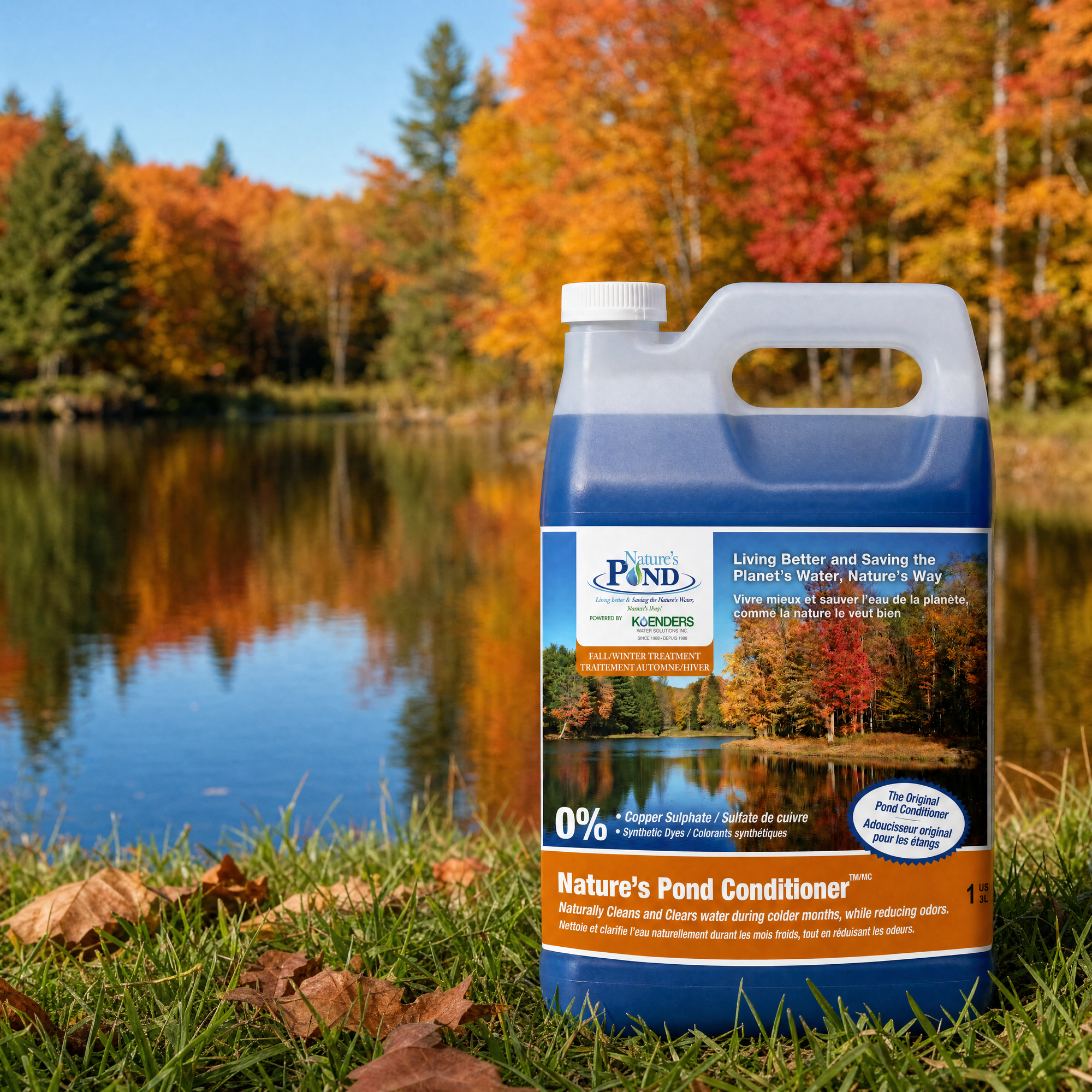
Aeration sets the stage; beneficial bacteria does the nutrient work. Nature's Pond Conditioner is an all-natural blend of beneficial bacteria, enzymes and plant extracts that consumes the excess phosphorus and nitrogen algae feed on and converts organic matter to carbon dioxide and water. It is non-pathogenic and safe for fish, pets, livestock and wildlife when used as directed. Because those aerobic bacteria need dissolved oxygen to work, they perform best paired with aeration, which is why we combine the two in one program.
Manage what runs into the pond
Every bag of fertilizer, every manure-laden runoff event and every pile of grass clippings adds nutrients that a bloom can use. Keeping a buffer of unmowed vegetation around the shoreline, diverting runoff, and not over-feeding fish all reduce the nutrient load. Combined with aeration and beneficial bacteria, this is the whole idea behind our 3-step Pond Care Program: fix the cause, do not just fight the symptom.
For a fuller walkthrough of the natural approach across every kind of pond algae, see our complete guide on how to get rid of pond algae naturally. If you are weighing a chemical route, our comparison of copper sulfate and its natural alternatives explains why the kill-sink-rot-refuel cycle keeps blooms coming back.
Toxic or just green? Where to look next
If your pond is simply green and cloudy with no paint-like scum, you are most likely dealing with harmless planktonic algae rather than cyanobacteria. Our diagnostic guide on why pond water turns green walks through that common nuisance bloom and how to clear it safely. When you want a personalised prevention plan, our in-house pond experts will review your pond and recommend the right setup at no cost: just contact our team for a free recommendation.
Frequently asked questions
Related
- How to get rid of pond algae naturally The complete root-cause natural program
- Why is my pond water green? The harmless nuisance bloom, and how to clear it
- Copper sulfate alternatives Why chemical kills keep blooms coming back
- Does aeration reduce pond algae? How bottom aeration starves blooms
- Off-grid windmill aeration Wind-powered aeration for remote ponds
- The 3-step Pond Care Program Renew, Revive, Remove
FAQ