 Canada
 United States
Diagnostic guide
Is Pond Bacteria Safe for Fish, Dogs, Livestock, and Swimming?
The honest safety answer for animal owners: beneficial pond bacteria is non-pathogenic and safe for fish, pets, and livestock when used as directed, and it is not the same as harmful blue-green algae.
Last updated August 31, 2026
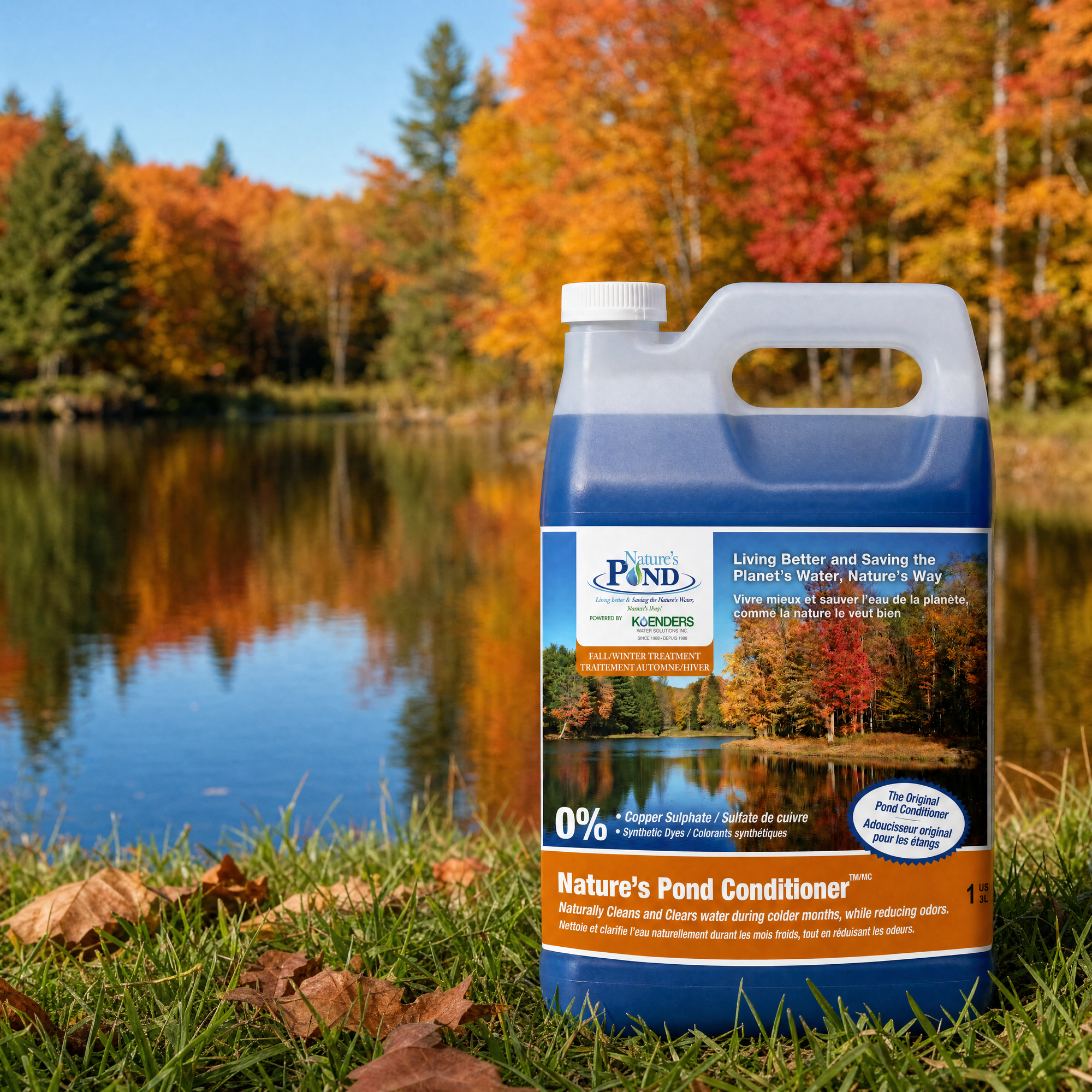
Nature's Pond Conditioner is an all-natural blend of beneficial bacteria, enzymes, and plant extracts with a food-grade dye. The bacteria are non-pathogenic and safe for fish, pets, livestock, and wildlife when used as directed. Beneficial bacteria is not the same as harmful blue-green algae. Always follow the current product label.
Is pond bacteria safe for fish and animals?
If your dog swims in the pond, your cattle drink from it, or the kids splash around all summer, this is the question that should come before you buy anything: is it safe to treat the water? The short answer is yes. Nature's Pond Conditioner is an all-natural blend of beneficial bacteria, enzymes, and plant extracts with a food-grade dye. The bacteria are non-pathogenic, meaning they are not the kind that cause disease, and the blend is formulated to be safe for fish, pets, livestock, and wildlife when used as directed.
That is the opposite of the harsh-chemical approach. Instead of adding something toxic to knock down algae, beneficial bacteria simply speeds up the same natural cleanup that already happens in healthy water: digesting the organic waste, fish droppings, and dead plant matter that would otherwise rot on the bottom. Below we walk through safety for each animal, then clear up the single biggest point of confusion: beneficial bacteria is not blue-green algae.
Beneficial bacteria works with the pond's natural biology instead of poisoning it, which is exactly why it is gentle on the fish, pets, and livestock that share the water.
What is actually in a beneficial-bacteria conditioner
Knowing what goes in the water is the fastest way to feel confident about it. Nature's Pond Conditioner is a blend of a few simple, natural components, each with a job:
- Beneficial bacteria, a mix of aerobic and anaerobic strains that digest organic muck and drive the nitrogen cycle, converting waste into carbon dioxide and water.
- Enzymes, non-living proteins that kick-start the breakdown of tough material so the bacteria can finish digesting it.
- Plant extracts, which support the natural conditioning process.
- A food-grade dye, which gives treated water its tint and helps shade out the light algae needs to bloom.
There is no copper, no algaecide, and no synthetic biocide in the blend. If you want the full picture of how the microbes do their work, our guide to how beneficial bacteria and enzymes actually work breaks down the mechanism step by step.
Is pond bacteria safe for fish and koi?
Yes. The bacteria in the conditioner are non-pathogenic and formulated to be safe for fish, including sensitive koi, when used as directed. Far from harming them, beneficial bacteria improves the water fish live in: it lowers ammonia and nitrite, the invisible waste products that stress and eventually kill fish, and it digests the muck that robs the bottom of oxygen.
This is the crucial difference from copper algaecides, which can damage fish gills and crash oxygen levels as the killed algae decays. A biological program does the opposite. For a fish-first pond, keep the water aerated and dose to your water volume, and see koi and ornamental pond care for the full routine. If you keep koi and are weighing your options, bacteria versus algaecide lays out why the natural route is the safer long-term choice for fish.
Is pond bacteria safe for dogs and pets?
The conditioner is a non-pathogenic, all-natural blend and is designed to be safe for pets when used as directed. For any re-entry timing after treatment, follow the current product label rather than assuming a fixed window.
Here is the part worth being clear about: when a dog gets sick after a pond swim, the culprit is almost never a water treatment. It is harmful blue-green algae, a natural bloom that can produce toxins and is genuinely dangerous to dogs. Beneficial bacteria does not cause those blooms. In fact, by consuming the excess phosphorus and nitrogen that feed algae, a bacteria-plus-aeration program helps prevent the very conditions harmful blooms need. We cover the warning signs in our guide to spotting toxic blue-green algae blooms.
Is treated pond water safe for livestock?
The conditioner is designed to be safe for livestock and wildlife when used as directed, and healthier, better-oxygenated water is simply better drinking water for cattle and horses. Anaerobic, stagnant water that smells of rotten eggs is a sign of a septic bottom, and cleaning that up with bacteria and aeration improves palatability and water quality at the trough or dugout.
For any livestock-water decision, follow the label, and if you have any doubt about a specific pond, test the water first. Blue-green algae is a real risk to a herd, so know how to spot a toxic bloom before it reaches your cattle. For the broader routine on tanks, troughs, and dugouts, see how to keep livestock water clean without harsh chemicals and our notes on stock tank and trough water.
Is pond conditioner safe for swimming?
The blend is non-toxic and non-pathogenic and contains a food-grade dye, the same category of colorant used to tint water features. For any specific swim or re-entry window after application, follow the current product label rather than assuming a set time.
The dye is a common swimmer question too, since it tints the water. It behaves much like the dye story we tell in is pond dye safe for fish: it is a food-grade colorant, not a chemical treatment. As always, the honest swimming risk in any natural pond is a harmful algae bloom, not the conditioner, which is exactly why keeping water aerated and balanced matters.
The important part: this is NOT blue-green algae
Here is where a lot of well-meaning searches go sideways. People read that "bacteria" can be dangerous in ponds and assume the beneficial bacteria they add is the problem. It is not. The two things are almost opposites.
Beneficial bacteria vs harmful cyanobacteria
Beneficial bacteria are the non-pathogenic microbes you deliberately add to digest waste and clean the water. Blue-green algae, more correctly called cyanobacteria, is a naturally occurring bloom, usually triggered by too many nutrients and warm, still water, that can produce toxins harmful to dogs, livestock, and people. One is a cleanup crew; the other is the mess. Adding beneficial bacteria and running aeration helps starve out the nutrient conditions that drive harmful blooms. It does not create them.
| Feature | Beneficial bacteria (added) | Blue-green algae (cyanobacteria) |
|---|---|---|
| What it is | Non-pathogenic microbes you add on purpose | A natural bloom triggered by excess nutrients |
| Toxins | None | Can produce toxins |
| Effect on the pond | Digests waste, reduces muck, clears water | Can foul water, cause odor, and turn surfaces pea-green or paint-like |
| Safe for animals | Yes, when used as directed | Can be hazardous to dogs, livestock, and people |
| What to do about it | Add it as part of a care routine | Keep animals out, test if unsure, and prevent it with nutrients + oxygen control |
When a pond genuinely is unsafe (and what to test)
Being reassuring about the conditioner does not mean every pond is automatically safe. If you see a bright green, blue-green, or paint-like scum, a musty or swampy smell, or clumps that look like spilled paint on the surface, keep pets and livestock away and do not swim until it clears. Persistent odor, dead fish, or run-off from fields upstream are all reasons to check the water. Our pond water testing results guide walks through reading ammonia, nitrite, and other results so you know what your numbers are telling you.
How to use pond bacteria safely
Beneficial bacteria is forgiving, but a few habits keep it both safe and effective:
- Read and follow the current product label for dose, timing, and any re-entry guidance. The label is the final word, not a blog.
- Dose to your actual water volume, not a guess. Surface acres times average depth in feet, divided by four, gives the acre-feet figure used for sizing a treatment.
- Keep the pond aerated. The bacteria that clean fastest are aerobic and need oxygen, so aeration makes the whole program work better and keeps the bottom from turning septic.
- If you have recently used a copper algaecide or run a UV clarifier, wait per those labels before adding bacteria, since both kill the microbes you are paying for.
- When in doubt about a specific pond and specific animals, test the water first.
This safety-first, root-cause approach is the whole idea behind the 3-step Pond Care Program: Renew the water with the conditioner, Revive it with aeration, and Remove built-up muck and weeds mechanically. It is also why natural pond care for acreages leans on biology rather than chemicals in the first place.
Shop with confidence
For animal owners, the reassuring version is also the true one: a non-pathogenic, all-natural blend that cleans the water your fish live in and your animals drink from, used as directed. If you would like a hand matching the right treatment to your pond size, depth, and the animals that use it, contact our pond experts for a free recommendation. When you are ready, browse Nature's Pond Conditioner, the safe, all-natural blend.
Related
- How beneficial bacteria and enzymes work The mechanism behind the conditioner
- Spotting toxic blue-green algae blooms Protect dogs, kids, and livestock
- Nature's Pond Conditioner The safe, all-natural bacteria blend
- How to test your pond water Read ammonia and nitrite results
- The 3-step Pond Care Program Renew, Revive, Remove
- Free recommendation from our pond experts Match a treatment to your pond
FAQ