 Canada
 United States
Water quality
Blue-Green Algae Liability: HOA, Pet, and Public-Health Risk (and How to Prevent It)
Toxic blue-green algae can sicken dogs, livestock, and people, and you cannot judge a bloom by sight. What families and HOA boards need to know, and how to prevent it.
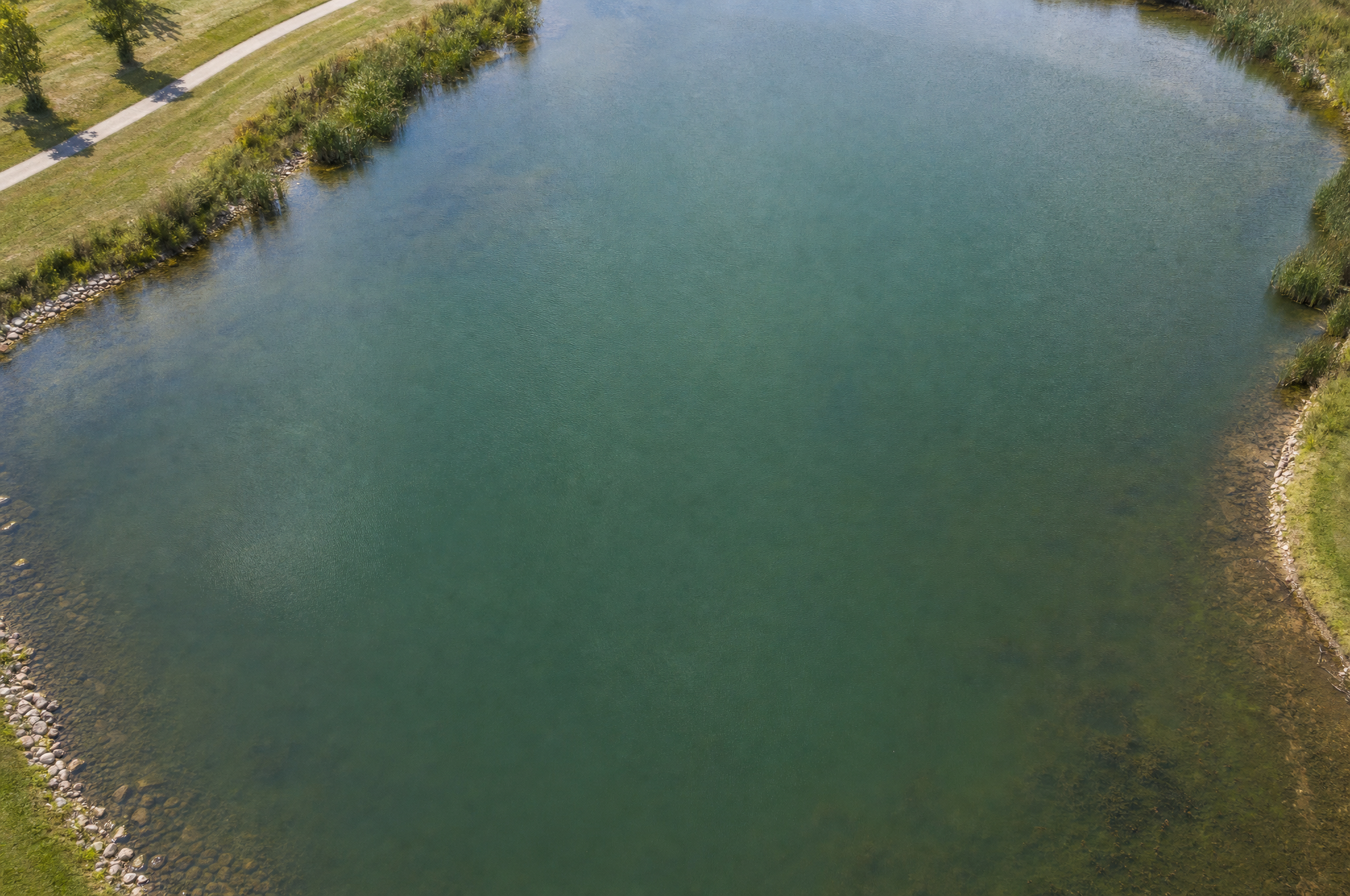
Blue-green algae (cyanobacteria) can produce toxins dangerous to dogs, livestock, and people, and you cannot tell whether a bloom is toxic just by looking at it. There is no antidote for cyanotoxin poisoning in dogs, so keep pets and children away from scummy water and seek a veterinarian immediately. Prevent blooms by controlling nutrients and raising oxygen.
Every warm summer brings the same anxious question to pond owners and HOA boards: is that green scum on the water actually dangerous? For a shared community pond or a family acreage, the honest answer is that it can be, and that it deserves to be taken seriously. Blue-green algae, more correctly called cyanobacteria, can produce toxins that harm dogs, livestock, and people, and no one can confirm a bloom is safe simply by looking at it.
This is a safety-first guide, not legal advice. It explains what cyanobacteria is, why you cannot judge toxicity by sight, the warning signs of poisoning in dogs, the duty-of-care questions that shared-water owners face, and, most importantly, how to prevent toxic blooms in the first place. Prevention is the part most articles skip, and it is the part you actually control.
What blue-green algae (cyanobacteria) is and why it is dangerous
Despite the name, blue-green algae is not really algae at all. It is a group of photosynthetic bacteria called cyanobacteria that have lived in fresh water for billions of years. Under the right conditions, warm water, calm surface, and an abundance of nutrients, they multiply explosively into what is called a harmful algal bloom (HAB).
The danger is that some cyanobacteria produce cyanotoxins. According to the US EPA's guidance on cyanobacteria and cyanotoxins, these toxins can affect the liver, the nervous system, and the skin, and exposure can occur by swallowing contaminated water, by skin contact, or by inhaling spray. A pond does not have to be a lake to be a risk: a small stormwater pond behind a row of townhomes can bloom just as readily as a large lake.
The same root cause that drives ordinary green water drives toxic blooms: excess phosphorus and nitrogen, low dissolved oxygen, and warm, stagnant conditions. That is why a nutrient-rich, poorly circulated pond is the one most likely to turn dangerous. If you want the mechanism in depth, see why your pond turns green every summer.
You cannot tell if a bloom is toxic by sight
This is the single most important thing to understand, and it is where good intentions go wrong. A bloom that looks alarming may be harmless string algae, and a bloom that produces dangerous toxins can look no different from an ordinary green tinge. Toxicity depends on which cyanobacteria are present and whether they are actively releasing toxins, and that changes day to day. Veterinary and public-health sources are consistent on this point: you cannot confirm toxicity by eye, so treat any dense bloom as potentially toxic until it is tested or clears.
There are, however, visual cues that should raise your caution level and prompt you to keep everyone out of the water. Cyanobacteria blooms often look like spilled paint, pea soup, or a blue-green or turquoise scum that collects along the downwind shore. Foam, surface films, and a strong musty or septic odor are also common. The table below is a caution guide, not a toxicity test: the safe action in every ambiguous case is to stay out.
| What you see | What it may be | Action |
|---|---|---|
| Green hair-like strands or mats you can lift on a stick | Filamentous or string algae (often not cyanobacteria) | Keep pets from drinking; remove mechanically; stay cautious |
| Tiny floating leaves carpeting the surface | Duckweed or watermeal (a plant, not cyanobacteria) | Not a cyanotoxin risk itself, but signals high nutrients |
| Pea-soup green, paint-like or turquoise scum, foam, musty odor | Possible cyanobacteria bloom | Assume toxic: keep pets, livestock, and children out until tested or clear |
If in doubt, stay out. No pond scum is worth a dog's life or a child's hospital visit.
Symptoms of blue-green algae poisoning in dogs
Dogs are the most common victims because they wade, swim, drink, and then lick the toxins off their coats. The onset can be frighteningly fast, from minutes to a few hours after exposure. Veterinary references, including Cornell's veterinary guidance and PetMD, describe symptoms that can include vomiting, diarrhea, drooling, weakness, disorientation, muscle tremors, seizures, and difficulty breathing. Because different cyanotoxins attack the liver or the nervous system, signs vary, but any of them after water contact is an emergency.
The hard truth that makes this so urgent: there is no antidote for cyanotoxin poisoning. Treatment is supportive and time-sensitive, so minutes matter. If your dog has been in or near a suspect bloom and shows any of these signs, do not wait to see if it passes.
- Rinse first, then go: if you can do it in seconds, rinse your dog with clean water so it stops licking toxins off its fur, then head straight to a vet.
- Call ahead: phone your veterinarian or the nearest emergency clinic so they are ready when you arrive.
- Bring information: note when and where the exposure happened and what the water looked like.
- Do not induce vomiting unless a veterinarian instructs you to.
Livestock face the same danger on a larger scale. Cattle and other stock that drink from a blooming dugout or pond can be poisoned quickly, which is why herd owners watch water this closely; the details are covered in our guide to blue-green algae and cattle.
HOA and shared-water duty of care
When the water is a common-area or stormwater pond, a bloom stops being one family's problem and becomes a governance question. This is where the word liability enters the conversation. To be clear, this article does not give legal advice, and the specifics vary by jurisdiction, so consult your own counsel. But the general principle is worth understanding: a board that knows, or reasonably should know, about a hazardous condition on shared property may carry a duty to warn residents and to take reasonable steps to reduce the risk.
For a shared or stormwater pond, that duty of care often shows up as three practical obligations that boards can act on well before a lawyer is ever involved.
Warning, restricting access, and documenting
- Warn promptly. Post clear signage at the water's edge and notify residents through your normal channels when a suspect bloom appears. Name the risk to pets and children specifically.
- Restrict access. Close or rope off swimming, wading, and shoreline access to the affected area until the bloom is tested or has clearly cleared, and keep in mind that toxins can linger after the water looks better.
- Document everything. Keep dated photos, notes on conditions, records of when warnings were posted, and any communication with a lake-management professional or local health authority. Documentation shows the board acted reasonably.
The deeper point for boards is that reactive scrambling during a bloom is stressful, expensive, and hard to defend, while a documented, proactive maintenance plan is the opposite. If you sit on a board or manage a property, our guide to HOA responsibilities and budgeting lays out how to build that plan, and our work with community and HOA ponds shows what a defensible program looks like in practice.
How to prevent toxic blooms
Here is the encouraging part. Cyanobacteria blooms are not random bad luck; they are the predictable result of conditions you can change. Take away the excess nutrients and the low-oxygen, stagnant water, and you take away the fuel a bloom needs. The goal is not to react to blooms with harsh chemicals, but to make your water an inhospitable place for them to form. That is exactly what the 3-step Pond Care Program, Renew, Revive, Remove, is built to do.
Raise oxygen and circulate the water
Warm, calm, stratified water is a cyanobacteria factory: the surface heats up, the bottom goes low on oxygen and turns anaerobic, and that oxygen-starved sediment releases the phosphorus that feeds the next bloom. Bottom-up diffused aeration breaks that cycle. It raises dissolved oxygen throughout the water column and keeps the pond mixed, which favours the beneficial organisms you want and discourages the cyanobacteria you do not. Aeration is the single most effective structural change most ponds can make.
Digest the nutrients with beneficial bacteria
Aeration sets the stage; beneficial bacteria do the cleanup. Nature's Pond Conditioner is an all-natural blend of aerobic and anaerobic beneficial bacteria, enzymes, and plant extracts that converts the organic muck on your pond bottom into carbon dioxide and water. Less organic muck means fewer stored nutrients, and fewer nutrients means less fuel for blooms. It is non-pathogenic and safe for fish, pets, livestock, and wildlife when used as directed, which is precisely the opposite of reaching for copper sulfate. Copper kills algae that then sinks, rots, and refuels the next bloom, so it treats the symptom and feeds the cause.
Remove existing growth and reduce inputs
- Rake or mechanically remove heavy weed and algae mats so they do not decay in place and add to the nutrient load.
- Keep lawn fertilizer, grass clippings, and pet waste away from the shoreline, since runoff is a major phosphorus source for community ponds.
- Maintain a vegetated buffer strip at the water's edge to filter runoff before it reaches the pond.
- Address the muck layer over time rather than chasing each bloom, because the sediment is where the nutrients are stored.
For a large or shared waterbody, these levers combine into a full program. Our guide to keeping lakes and large ponds clear, and the deeper large-pond and HOA water program, walk through how to scale prevention to acreage water. If you would rather talk it through, our in-house pond experts will build a prevention plan for your specific pond, free, when you contact us.
The bottom line for families and boards
Blue-green algae is one of the few pond problems where the stakes include a pet's life or a child's health, so caution is the right default. You cannot judge a bloom by sight, there is no antidote once a dog is poisoned, and the safe move is always to keep pets and people out of scummy water and to get to a veterinarian fast after any exposure. For HOA and shared-water owners, a documented, proactive plan is both the safest and the most defensible path. And because blooms are driven by nutrients and low oxygen, the durable fix is prevention: aerate, digest the muck biologically, and keep nutrients out, rather than fighting the same bloom with harsh chemicals every summer.
Related reading
For the full diagnostic detail on identifying and living with cyanobacteria, see our companion guide on spotting toxic pond blooms. To stop the ordinary green water that precedes many blooms, start with why your pond turns green every summer.
Written by
Nature's Pond Care Team
Pond care experts
Keep reading
Related articles

Water quality
Why Is My Pond Water Green? (And How to Fix It)
Green water almost always comes down to one thing. Here’s what’s happening in your pond, and the natural way to get your water clear.
Nature’s Pond Care Team5 min read
Water quality
How Beneficial Bacteria Clear Your Pond
The “good bugs” in a natural conditioner do the heavy lifting. Here’s what they actually do, and why oxygen makes them work.
Nature’s Pond Care Team6 min read
Seasonal guides
Why Your Pond Turns Green Every Summer, and How to Stop the Bloom
Every July your pond goes green again. Here is why summer triggers the same algae bloom, and how to break the cycle naturally instead of chasing it.
Nature's Pond Care Team9 min read

Get started
Put it into practice
Start with the conditioner, add aeration, and let nature do the rest.